
The strongest coastal exterior isn’t built from metal alone. For exposed metalwork, 316 stainless steel resists salt better than 304, while aluminum…
The strongest coastal exterior isn’t built from metal alone. For exposed metalwork, 316 stainless steel resists salt better than 304, while aluminum and copper alloys are also used in coastal settings. Fiber cement or vinyl siding, porcelain or luxury vinyl flooring, and brick or stone cladding address moisture and salt in other parts of the home. These saltwater resistant building materials work best when their connections and finishes are suited to a marine environment.
Salt air and damp conditions affect fasteners, flooring, siding, and stone in different ways, so choosing one durable material won’t address every exposure. This guide explains practical options for metals, exterior finishes, flooring, and stone, how material combinations can contribute to corrosion, and how routine maintenance can help preserve durability. Compare materials by where they’ll be used and how they perform, rather than relying on a single “coastal-grade” label.
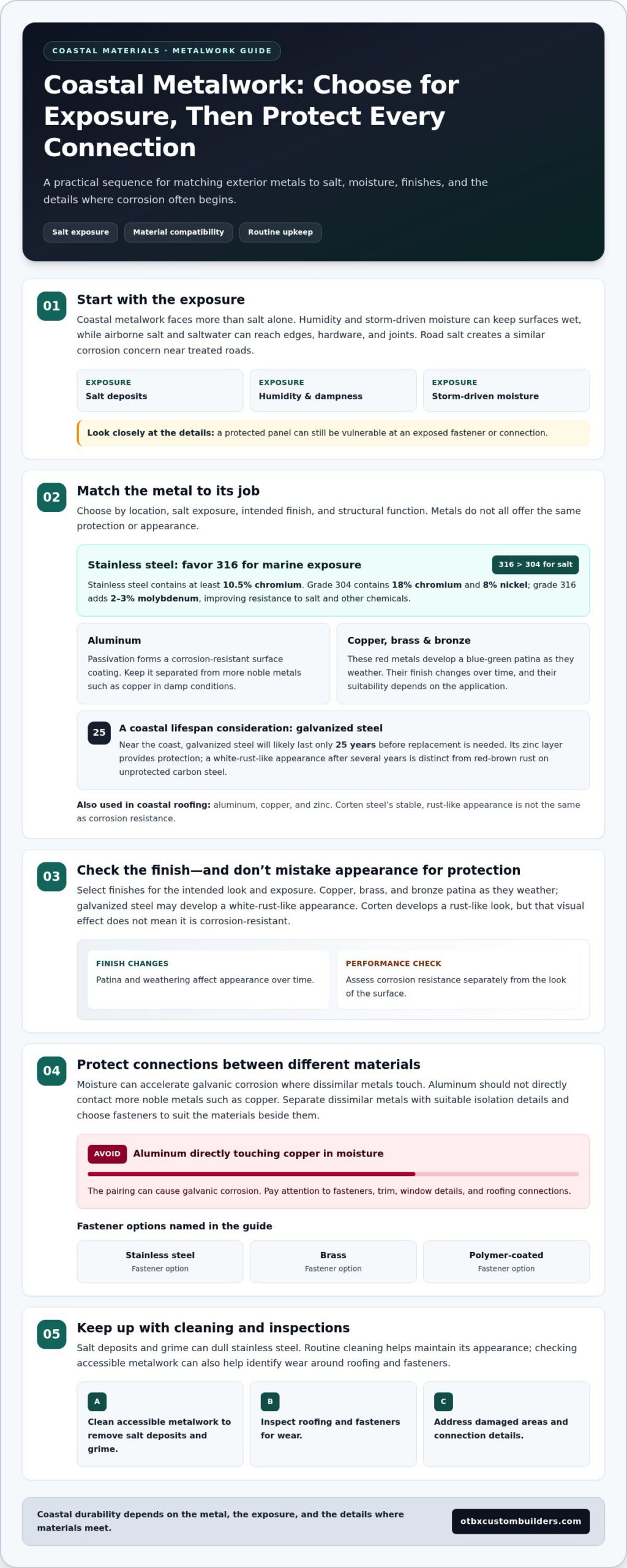
For coastal metalwork, choose materials based on exposure, contact with other metals, and the intended finish. Copper alloys, aluminum, and stainless steel suit different outdoor applications, while fasteners and window details need equal care.
Marine-grade metals are metals selected to tolerate saltwater exposure and coastal corrosion. Copper, brass, and bronze develop a blue-green patina as they weather, providing a finish that changes over time. Naval brass for saltwater applications consists of 59% copper, 40% zinc, and 1% tin. Aluminum forms a corrosion-resistant coating through passivation, while stainless steel relies on chromium. These choices matter for railings, trim, roofing, and other exposed elements, where salt and moisture can reach joints and fasteners. Aluminum, copper, and zinc roofing are also used for durable coastal roofs.
Coastal exposure combines salt deposits, humidity, and storm-driven moisture, which can keep outdoor surfaces wet. Road salt creates a similar corrosion concern for buildings near treated roads. Airborne salt and saltwater can reach metal edges, hardware, and connections, so even a protected panel may remain vulnerable at an exposed fastener. Impact-resistant windows, including laminated hurricane glass, use harder-to-break glass that can help protect homes from storm winds and flying debris. For coastal projects, consider window protection alongside the corrosion resistance of frames and hardware.
Untreated carbon steel rusts and can lose structural integrity over time. In moisture, incompatible metals can also corrode where they touch. Aluminum should not directly contact more noble metals such as copper, because the pairing can cause galvanic corrosion. Separate dissimilar metals with suitable isolation details, and choose fasteners that suit adjacent materials. Stainless steel, brass, or polymer-coated fasteners are options for doors, windows, and roofing. These connection details help prevent a durable surface from being undermined at its attachment points.
For saltwater exposure, reinforced or fiber-reinforced concrete adds strength. Galvanized or stainless-steel reinforcement is recommended because standard steel reinforcement rusts quickly in coastal areas. Choose the concrete mix and reinforcement to suit exposure and structural demands.
Concrete suits coastal foundations, walls, and seawalls because it resists moisture, corrosion, and storm damage. Reinforced or fiber-reinforced concrete adds strength for flood-prone foundations and seawalls. The design must account for site exposure and structural loads.
In the United States, coastal construction must meet applicable building-code provisions and project specifications for materials and corrosion protection. Designers consider exposure, structural use, and metal connections when determining the relevant requirements.
Corten steel develops a stable, rust-like appearance over time, but that visual effect is not the same as corrosion resistance. Copper, brass, bronze, aluminum, and stainless steel each have distinct performance and finish characteristics. Match the metal to its location and connection details instead of assuming one material suits every coastal application.
Stainless steel grades differ in composition, so performance varies with salt exposure. For coastal exterior work, match the grade to its exposure and function. Corrosion resistance and structural capacity are separate considerations, and the application must account for both.
Stainless steel contains at least 10.5% chromium, which forms a protective chromium oxide layer. Grade 304 contains 18% chromium and 8% nickel. Grade 316 adds 2-3% molybdenum, which improves resistance to salt and other chemicals. That makes 316 a more suitable choice than 304 for marine exposure.
Grade 430 contains 17% chromium and 0.12% carbon. It has a different composition from 304 and 316, so don’t assume every stainless grade offers the same protection. There are over 150 types of stainless steel. For exterior hardware, consider the grade, the amount of salt exposure, and whether moisture can remain around joints.
Galvanized steel relies on an outer zinc layer for protection. Near the coast, galvanized steel will likely last only 25 years before replacement is needed. Outdoor exposure can also leave a white-rust-like appearance after several years, which isn’t actual rust. That change is distinct from the red-brown rust that can signal corrosion in unprotected carbon steel.
Aluminum protects itself through passivation, which forms a corrosion-resistant surface coating. This makes it useful for some exterior applications, but contact with copper or another more noble metal can cause galvanic corrosion in moisture. Keep dissimilar metals separated at connections, including around fasteners and trim.
Material choice also affects maintenance and budget. Red metals can cost two to three times more than stainless steel, while architectural metal longevity generally increases with price. Cost alone doesn’t establish suitability: exposure, grade, finish, and structural role all matter. Even an expensive metal can corrode if connection details trap moisture.
Regular cleaning can help maintain stainless steel’s appearance. Salt deposits and grime can dull the surface, so include accessible metalwork in routine exterior cleaning. Inspect roofing and fasteners for wear, and address damaged coatings before moisture reaches the underlying metal. These steps help preserve appearance and protection over time.
For a coastal project, material decisions work best alongside the overall home design. Explore coastal home construction as part of planning exterior materials, connections, and maintenance access.
For roofs exposed to salt air, aluminum, copper, and zinc are durable options. Fiber cement or vinyl siding resists moisture, while stainless steel, brass, or polymer-coated fasteners help limit corrosion. Match each material to its exposure and maintenance needs.
Fiber cement board suits coastal siding because it doesn’t rot, swell, or attract termites. Its cement-based composition makes it a practical alternative where humid weather can challenge wood. Use it as part of a complete exterior assembly, with joints and edges detailed to manage moisture. It also provides an architectural finish without relying on untreated wood for exposed walls.
Vinyl siding offers another moisture-resistant option for coastal homes. Unlike traditional wood siding, it doesn’t warp or rot from moisture exposure. Its performance still depends on sound installation and intact connections: loose sections or openings can let water behind the siding. Compare the desired appearance, exposure, and upkeep before choosing vinyl or fiber cement for a specific exterior.
Wood can still suit a coastal design, but pressure-treated wood is the better choice where construction requires wood. Treatment improves resistance to moisture, rot, and termite damage compared with untreated wood, but doesn’t eliminate maintenance. Regular cleaning and sealing help keep treated wood siding in good condition, especially where surfaces face persistent dampness and salt deposits.
Roofing and siding should work together as an exterior system. Metal roofing can handle heavy rain and strong winds, and reflect sunlight to help keep a coastal home cooler. Aluminum, copper, and zinc are durable options for coastal roofs. For siding, fiber cement and vinyl provide moisture resistance, while pressure-treated wood suits designs that call for wood. Stainless steel, brass, or polymer-coated fasteners help reduce corrosion around exterior connections.
Maintenance protects materials’ performance and appearance. Clean siding to remove dirt and salt, then inspect seams, edges, and fasteners for wear. Clean and seal wood surfaces regularly, and address damaged areas before moisture reaches vulnerable components. Focus inspections on transitions, such as siding near windows or roof edges, where exposed details can collect water. These checks help preserve durability without treating any material as maintenance-free.
Material selection also shapes the finished look. Fiber cement can provide a consistent architectural surface, vinyl offers a different finish, and treated wood retains a natural appearance. Consider how the siding meets trim, roofing, and fasteners. Copper roofing, for example, brings a distinctive metal finish, while compatible fasteners help protect the surrounding assembly. A clear material plan balances appearance, exposure, and ongoing care.
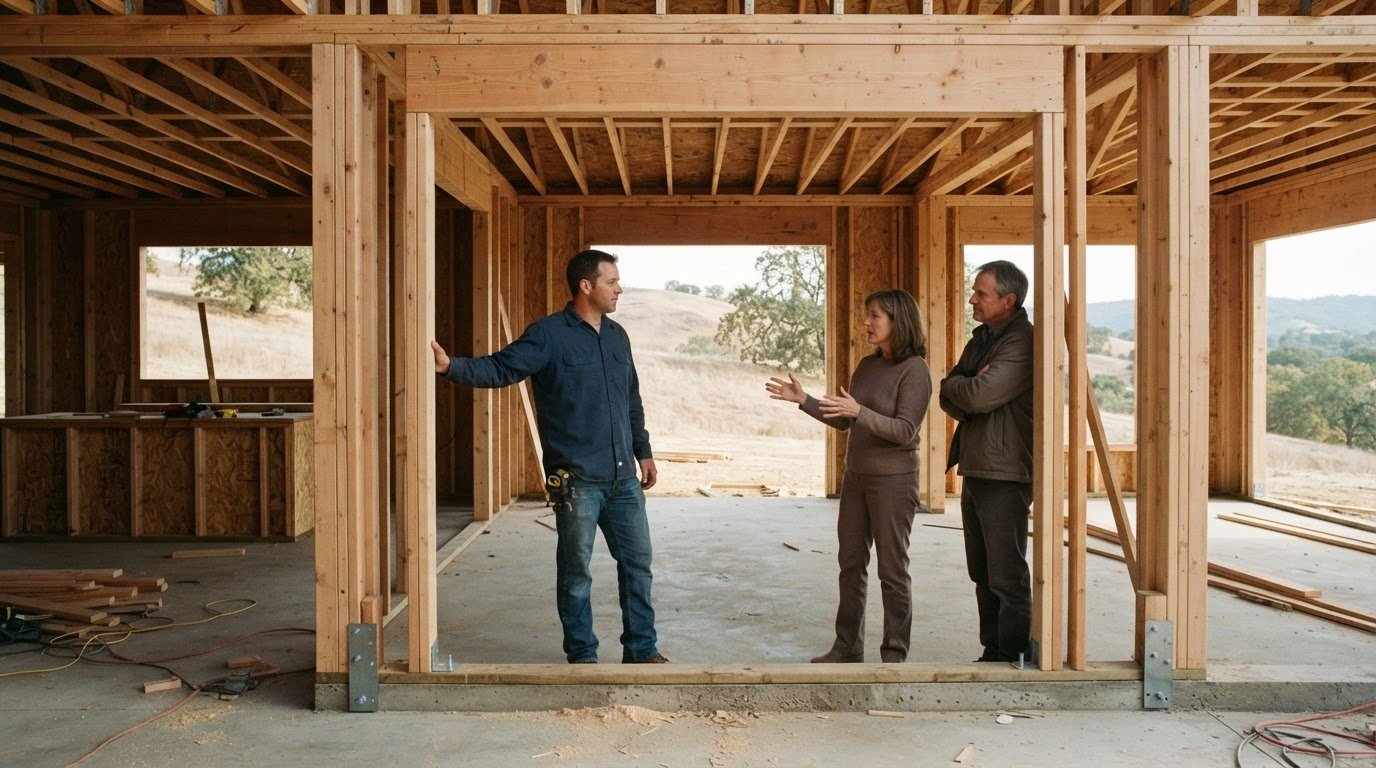
Coastal durability depends on how materials meet, not just on their individual properties. Moisture can collect at joints, fasteners, window edges, and roof penetrations. Selecting compatible materials and planning access for upkeep can reduce avoidable wear. A corrosion-resistant panel can still be undermined by a vulnerable fastener or water trapped beside it.
Galvanic corrosion can occur when dissimilar metals touch in moisture. Metals farther apart on the cathodic scale are more susceptible when combined. For example, avoid direct contact between aluminum and copper; isolate incompatible components at connections. Choose fasteners that suit adjacent materials, and pay attention to brackets, flashing, and trim. These small details affect the longevity of an exterior assembly.
Coatings need attention, too. Steel doors are durable and secure, but can rust if their protective coating fails. Inspect exposed edges, scratches, and hardware connections, then repair damaged coating before moisture reaches the steel. Stainless steel needs frequent cleaning to maintain its mirrorlike finish. Salt deposits and grime can dull the surface, so cleaning helps preserve appearance as part of routine exterior care.
Decking and fencing show why upkeep should suit the material. Composite decking resists moisture and UV rays and requires less maintenance than wood decking. Some decking materials may be better suited to humid conditions, but performance depends on the product and installation. Vinyl fencing is low-maintenance and doesn’t rot. These materials reduce some decay concerns, but regular inspection can still reveal loose fittings, surface damage, or places where water collects.
For wood, metal, and stone surfaces, regular cleaning and sealing help prevent corrosion and decay. Inspect coastal roofing and fasteners for wear, and look for cracks or rust during home inspections. Clear gutters to reduce water damage, leaks, and rot. Seal gaps around windows and doors to help keep moisture out. Each task addresses a different way water can affect the exterior.
Make inspections practical by including visible transitions in the maintenance plan. Check where roofing meets flashing, where a railing attaches to a deck, and where window frames meet siding. Look for lifted coatings, rust staining, cracked sealant, or standing water. These signs help distinguish surface dirt from a developing issue that could let moisture into adjoining materials.
A consistent maintenance plan supports each material’s intended service life. Record the condition of coatings, seals, fasteners, gutters, and wood finishes during inspections. Prioritize repairs where moisture has a clear path into the assembly. This measured approach helps protect exterior construction without assuming every material needs the same care.
Coastal flooring choices should reflect where water enters and how each room is used. Porcelain tile is water-resistant, durable, and easy to clean, making it practical for humid interiors. Luxury vinyl planks provide a water-resistant alternative to wood and greater durability in humid conditions. Natural stone adds a distinctive finish, but its suitability depends on location, surface treatment, and ongoing care.
Porcelain tile suits rooms where damp shoes, tracked-in moisture, or frequent cleaning are part of daily life. Its easy-clean surface simplifies routine care, and its durability supports regular household traffic. Luxury vinyl planks offer a wood-like appearance without relying on wood flooring in humid conditions. Compare the look you want with the room’s exposure and cleaning needs before choosing a finish.
Water resistance doesn’t mean every flooring detail can be ignored. Moisture can still reach edges, joints, and transitions between flooring types. Plan these connections around the room’s use, especially near exterior doors, kitchens, and bathrooms. A protective finish and appropriate sealing can support care for stone surfaces, while routine cleaning helps keep dirt and moisture from lingering.
Give natural stone a clear role in the design. Stone cladding is described as resistant to salt, humidity, and wind erosion, making it relevant for exposed coastal exteriors. That exterior use doesn’t guarantee identical performance as interior flooring. Match the stone’s finish and maintenance plan to its location, whether exposed to salt air outdoors or damp foot traffic indoors.
Stone can be an expensive choice, so consider its placement alongside practical flooring options. Porcelain tile may suit a busy, humid room that needs straightforward cleaning. Stone may make sense where its natural appearance supports the design and regular care can be planned. In both cases, consider how floor edges meet thresholds, walls, and adjoining surfaces.
Exterior transitions deserve attention, too. An aluminum threshold, for example, connects interior flooring with an exposed doorway where moisture and salt can collect. Choose details that can withstand conditions at the opening, and include them in routine cleaning and inspection. Cleaning and sealing help prevent decay on stone surfaces; for flooring, check edges and transitions for wear or moisture intrusion.
Set the material plan before construction so flooring, thresholds, and room layouts work together. Thoughtful floor planning design services can help organize those choices around room use, finish, and transitions.
OTBX Custom Builders, LLC can help plan a coastal home with saltwater resistant building materials considered alongside the overall build. Its New Home Construction service includes custom homes and stick-built homes, allowing exterior materials to be planned as part of the project rather than as isolated choices.
For properties that also need a dock, OTBX Custom Builders, LLC offers Dock Construction & Repair. Coordinating home and dock planning helps account for how coastal exposure affects both structures and their material requirements. Start with a conversation about your project scope and priorities.
Contact OTBX Custom Builders, LLC to discuss your coastal construction plans.
Material choices are part of a larger plan: how the home will be built, how its components meet, and how you’ll maintain them over time. Considering these decisions together turns a list of saltwater resistant building materials into a practical project plan. It also helps you balance the appearance you want with the exposure each surface will face.
For a new coastal home, OTBX Custom Builders, LLC offers New Home Construction, including custom homes and stick-built homes. Bring your priorities for exterior materials, interior finishes, and upkeep into the planning conversation. Clear decisions early can help align the design with how you intend to use and care for your home.
Contact OTBX Custom Builders, LLC to discuss your coastal home plans. Thoughtful planning is a solid starting point for a home designed around its setting.
Yes, stainless steel can corrode in saltwater, though its resistance depends on grade and exposure. Grade 316, with added molybdenum, performs better against salt than grade 304. Even a suitable grade needs appropriate connections and care: salt deposits, trapped moisture, or contact with incompatible metals can still cause problems. For example, clean exposed hardware and inspect joints where water can remain after coastal weather.
No single material suits every part of a coastal building. For exposed metalwork, grade 316 stainless steel, aluminum, and copper alloys each have useful corrosion-resistant properties. Fiber cement and vinyl suit moisture-exposed siding, while porcelain tile and luxury vinyl work for humid interiors. Concrete is used for coastal foundations and seawalls. These saltwater resistant building materials perform best when matched to their location, connections, and maintenance needs.
Grade 316 stainless steel offers improved salt resistance over grade 304 because it contains molybdenum. Aluminum forms a protective coating through passivation, but direct contact with copper can cause galvanic corrosion when moisture is present. Galvanized steel relies on an outer zinc layer; near the coast, it will likely last only 25 years before replacement. Choose among them by exposure, connection details, and the component’s structural role.
Pressure-treated wood is the supported choice when a coastal project requires wood; untreated species aren’t interchangeable with treated material. Treatment improves resistance to moisture, rot, and termite damage, but doesn’t eliminate upkeep. For example, treated wood siding still benefits from regular cleaning and sealing. Consider where the wood sits, how often it gets wet, and whether its finish remains intact when planning maintenance.
Material costs vary by type, grade, finish, and application, so compare options as part of the complete assembly, not just by surface material. Red metals can cost two to three times more than stainless steel, but that comparison doesn’t determine the cost of a complete coastal build. Fasteners, installation details, and future maintenance also affect the decision, so weigh the initial material choice against the upkeep its finish requires.
Separate dissimilar metals at connections, especially aluminum and copper, to reduce galvanic corrosion in damp conditions. Choose fasteners compatible with nearby materials, and avoid details that trap moisture around windows, roofing, or trim. Protect exposed steel with an intact coating, and plan access for cleaning. At joints and edges, sound sealing and drainage help prevent salt-laden moisture from lingering against vulnerable components.
Inspect materials as part of routine home care and after severe coastal weather, focusing on visible wear rather than following a fixed calendar interval. Check roofing fasteners, coatings, window seals, gutters, and wood finishes for rust, cracks, or damage. Clean salt and dirt from exposed surfaces, clear gutters, and repair worn protective finishes. How often each task is needed depends on exposure and how quickly deposits or damage recur.
Use reinforced or fiber-reinforced concrete with galvanized or stainless-steel reinforcement, because standard steel reinforcement rusts quickly in coastal areas. Select the concrete mix and reinforcement to suit the site’s exposure and structural demands.