A move-in-ready spec home can be the right choice, but it isn’t the same decision as commissioning a custom build. Selecting a high-end custom home…
A move-in-ready spec home can be the right choice, but it isn’t the same decision as commissioning a custom build. Selecting a high-end custom home builder makes sense when you want to shape the design and make decisions throughout the project, rather than choose from a home built for the market. The right fit depends on more than finished photos: relevant experience, clear pricing and contract terms, communication, and a track record of completing similar projects all matter.
It is reasonable to want confidence in a builder before committing to a complex, personal project. This guide explains how custom, semi-custom, production, and spec homes differ, and how to assess a builder’s experience, work, and process. You will also learn what to look for in references, estimates, contracts, and communication so you can make a considered choice that matches your priorities.
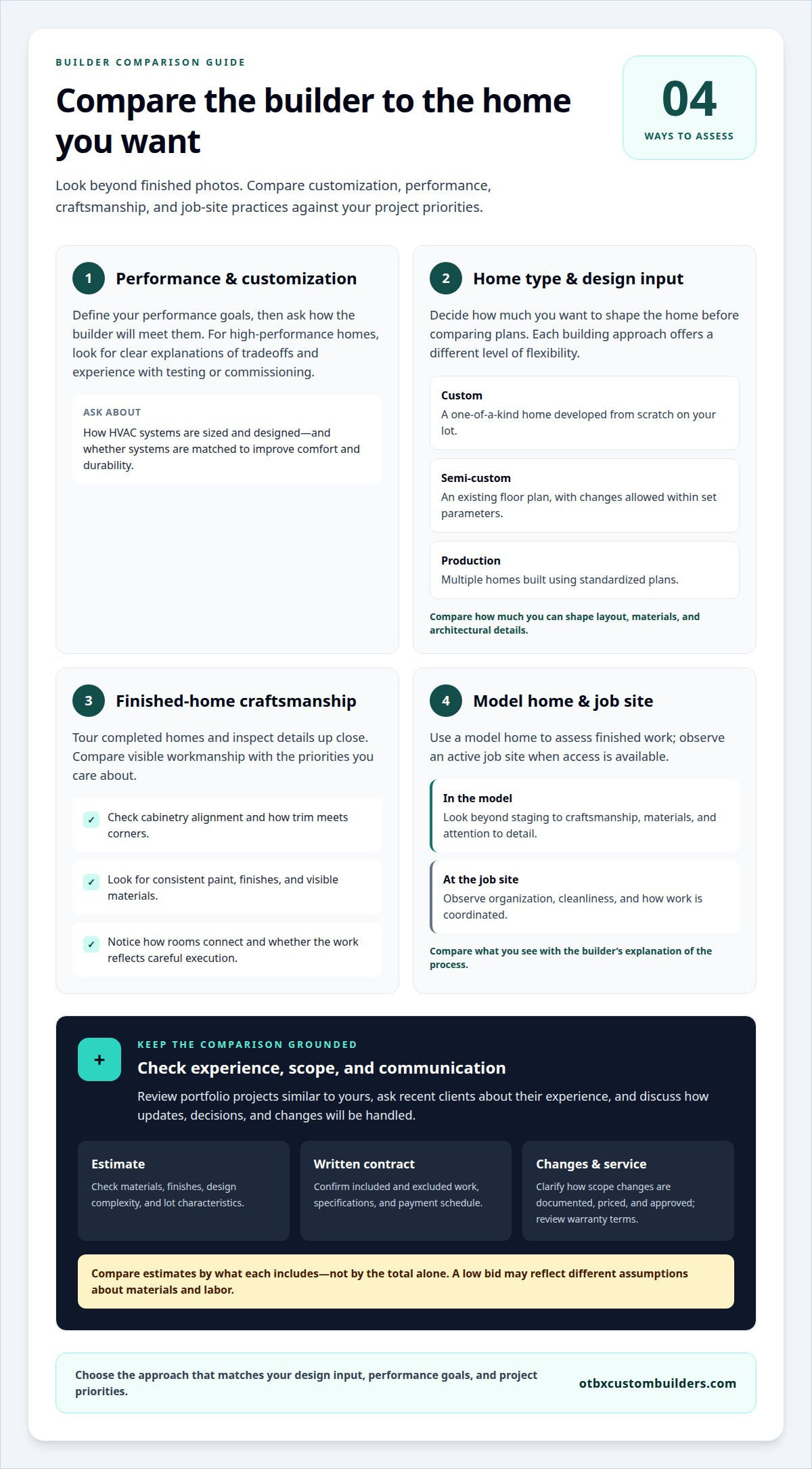
Compare builders against the home you want, not just their finished photographs. Use these four steps to assess customization, performance, craftsmanship, and job-site practices.
Define your performance goals, then ask builders to explain their approach. Entry-level custom homes typically use standard insulation and HVAC strategies and meet code. Mid-level builders should explain why they use particular construction details. Full-custom homes need close coordination across design and construction. High-performance homes require clear explanations of tradeoffs and experience with testing or commissioning. Ask how HVAC systems are sized and designed, rather than guessed. Avoid redundant or mismatched systems that add complexity without improving comfort or durability.
Identify how much input you want before comparing plans. A custom builder develops a one-of-a-kind home from scratch on your lot. A semi-custom builder starts with an existing floor plan, then allows changes within set parameters. Production builders construct multiple homes using standardized plans. Compare each model with your vision: can you shape the layout, materials, and architectural details, or must you choose from preset options? The distinction affects design flexibility and how many decisions the process requires.
Walk through finished homes and inspect details at close range. Look at how cabinetry aligns, how trim meets corners, and whether paint and finishes appear consistent. Examine visible materials and workmanship rather than relying only on photos or a dramatic floor plan. Consider how rooms connect and whether the finished work reflects careful execution. Compare what you see with your priorities, such as durable finishes or detailed millwork, and note specific questions for each builder.
Tour a model home to assess finished work, then observe an active job site when access is available. In the model, look beyond staging to craftsmanship, material choices, and attention to detail. At the site, observe organization, cleanliness, and how work is coordinated. An orderly environment can offer useful insight into project management. Compare what you see with the builder’s explanation of the process, and consider whether job-site practices appear consistent with the finished quality you expect.
Build a shortlist through local research, then compare how each builder communicates, defines project scope, and handles service after construction. A clear process helps you make decisions with useful information, not assumptions.
Start with your local home builders association, which can help identify builders working in your area. Add names from local real estate agents, friends, and relatives with direct experience. Review local newspaper real estate sections to see which builders are active and what types of homes they build. Look for relevant project experience, not just name recognition. For a custom build, the builder’s custom home planning should connect your priorities to the project scope.
Use the first meeting to explain your vision and observe how the builder responds. A strong fit listens, offers constructive feedback, and explains practical ways to realize your ideas. Discuss communication expectations before construction, including the preferred method and frequency of updates. Ask who will be your main contact and how decisions or changes will be shared. Clear answers help you judge whether the working relationship will keep you informed.
Review a written estimate and detailed contract before work begins. The estimate should reflect materials, finishes, design complexity, and lot characteristics. The contract should define included and excluded work, specifications, and the payment schedule. Ask how changes to selections or scope are documented, priced, and approved. Compare estimates by what each includes, not by the total alone. A low bid may reflect an incomplete understanding of the project or different assumptions about materials and labor.
Review any warranty coverage described in the written contract, including what it covers for workmanship and materials. Custom builders’ warranty and post-construction service terms vary, so examine the stated coverage, exclusions, reporting process, and follow-up responsibilities before signing. Clarify how concerns are recorded after the home is complete and who receives them. Specific written terms give both sides a shared reference if a workmanship or material issue arises.
Local permits, zoning rules, and building codes depend on the property’s jurisdiction, so plan for applicable requirements before construction. Red flags include refusing a written contract, avoiding clear answers about scope, or withholding recent-client references.
Study the builder’s portfolio for projects that resemble your planned home in design, materials, and site conditions. A collection of unrelated finished homes may show range, but it does not establish experience with your specific project. Ask for recent-client references and discuss whether the builder followed the plans, met expectations, and handled unexpected issues. Ask former homeowners whether they would hire the builder again. Their answers can reveal how the work unfolded beyond the finished photographs.
Compare your project’s demands with the builder’s completed work. A home with complex architectural details or challenging lot characteristics calls for relevant planning and construction experience. Ask who coordinates architects, engineers, and trades, and how decisions are resolved before work begins. A builder’s longevity can suggest financial stability and continued availability for warranty matters, but time in business alone does not prove fit. Look for examples showing the team has handled comparable coordination and complexity.
Review the builder’s license and request proof of workers’ compensation and liability insurance. Ask how the project will address local permits, zoning rules, and applicable building codes for the specific property. These requirements can affect site planning, design choices, and construction sequencing, so clarify who coordinates each approval. Also ask how trade partners are selected and whether they hold relevant licenses and insurance. Treat vague answers, missing documentation, or pressure to proceed without a written contract as warning signs.
Choose between a home shaped around your decisions and one built for the market. The key difference is when you enter the process and how much influence you want.
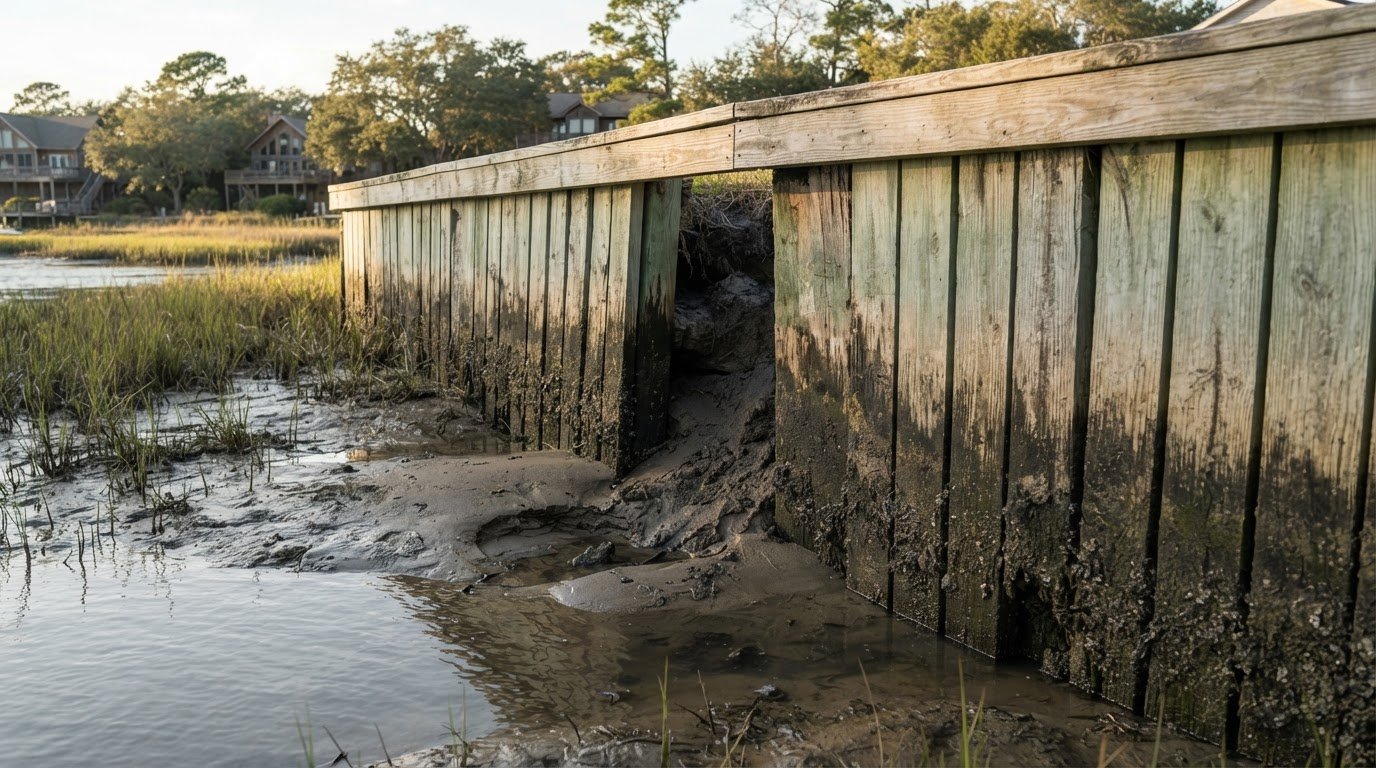
OTBX Custom Builders, LLC is a natural fit when your next step is planning a custom home rather than buying a home built for the general market. Its New Home Construction service includes custom and stick-built homes, giving you a way to shape the design around your property and priorities. OTBX also offers Residential Drafting Services to develop architectural plans and floor layouts for a new build. For waterfront properties, Dock Construction & Repair may also be relevant when dock work forms part of the project.
Bring your goals, site considerations, and design ideas into an early conversation. OTBX guides clients through its Coastal Dream Home Advantage Process, from concept and design through construction and move-in. Contact OTBX Custom Builders, LLC to discuss your new home project.
Before selecting a high-end custom home builder, write down what matters most in your future home. Separate essential requirements from preferences, and note where you are willing to make tradeoffs. These priorities give the first planning conversation a clear starting point and help keep design decisions connected to your goals.
Selecting a high-end custom home builder is also about choosing a working relationship that fits how you make decisions. Consider how involved you want to be, what information helps you feel confident, and how you prefer to discuss changes. Use those expectations as a guide when selecting a high-end custom home builder, and share them early so the conversation can focus on a practical path forward.
If you’re ready to discuss your plans, contact OTBX Custom Builders, LLC. A thoughtful first step can help turn your ideas into a workable project.
Request the builder’s license and current proof of workers’ compensation and liability insurance. Ask how the company’s financial track record supports completing projects and meeting commitments after construction. Longevity can suggest financial stability and continued availability, but it does not replace documentation. Also ask whether key trade partners carry appropriate licenses and insurance, since their work contributes to the completed home.
Look for completed projects that share your home’s design demands, site conditions, and level of finish. References can add context that photos cannot: ask how the builder handled unexpected issues, whether the homeowner’s expectations were met, and whether they would hire the builder again. A useful reference has firsthand knowledge of the process, not simply an opinion of the finished home.
These structures define how the project’s payment is calculated. A fixed-price agreement sets a price for a defined scope; cost-plus generally ties payment to project costs and an agreed fee; a guaranteed maximum price sets a ceiling subject to contract terms and changes. Compare what each method includes, how adjustments are handled, and what records you will receive. The contract structure can affect the final bill.
There is no single useful average per-square-foot figure for every high-end custom home. The price depends on the project and is provided after a quote request; key factors include location, lot characteristics, design complexity, materials, finishes, and included work. A square-foot figure can hide differences in site preparation or specifications, so compare estimates for the same scope rather than treating that metric as a complete budget.
A clear contract should identify specifications, included and excluded work, timelines, payment schedules, and warranty coverage for workmanship and materials. It should also explain allowances, which set an amount for selections not finalized, and describe how selections that exceed or fall below an allowance affect the project. For change orders, establish how revisions are documented, priced, approved, and reflected in the schedule before work proceeds.
Put bids side by side and align the scope before comparing totals. Check whether each estimate addresses the same materials, finishes, design details, and lot conditions. Review exclusions and allowances closely; a lower figure may leave out work or rely on different assumptions. Also account for lot improvements, permits, and potential upgrades or extras when planning the overall project budget.