A low estimate can create more uncertainty than a higher one if it leaves scope, allowances, or change procedures unclear. Choosing a custom home…
A low estimate can create more uncertainty than a higher one if it leaves scope, allowances, or change procedures unclear. Choosing a custom home builder without surprises doesn’t mean expecting every detail to go exactly as planned. It means understanding how the builder will manage the details that can affect your budget and schedule.
Before construction begins, look for clear numbers, defined responsibilities, and timely answers. Material availability, site conditions, and design decisions can all affect a project. Your estimate and contract should explain what’s included, what isn’t, and how changes are reviewed and approved.
This guide shows you how to compare builders using consistent questions and documents, assess estimates and contracts, and understand how allowances and change orders may affect a project. You’ll also learn what to ask about design coordination, site preparation, and communication, so you can identify uncertainty early and make informed decisions before work starts.
A custom home builder without surprises doesn’t promise that every cost, decision, or schedule detail will stay unchanged. Instead, the builder explains what’s known, identifies what still needs confirmation, and communicates promptly when new information affects the plan.
Transparency means making scope, assumptions, and change procedures clear. It is not a promise that the project will have no cost overruns. Site conditions may differ from early expectations, and design choices can evolve. A predictable process gives you a way to assess new information, understand its potential impact, and decide what happens next.
Some surprises start as preventable planning gaps. An estimate may leave out work you assumed was included, an exclusion may be easy to miss, or a design choice may remain unresolved until it affects ordering or construction. Unclear decision responsibilities and inconsistent updates can add to the confusion. A written scope and an agreed communication process help bring these issues to light sooner.
Other changes arise from conditions that weren’t fully apparent before work began. A site assessment can inform planning, but it may not reveal every condition that becomes visible during construction. Distinguish between an overlooked planning detail and new information that calls for a considered response, then ask how the builder will address either situation.
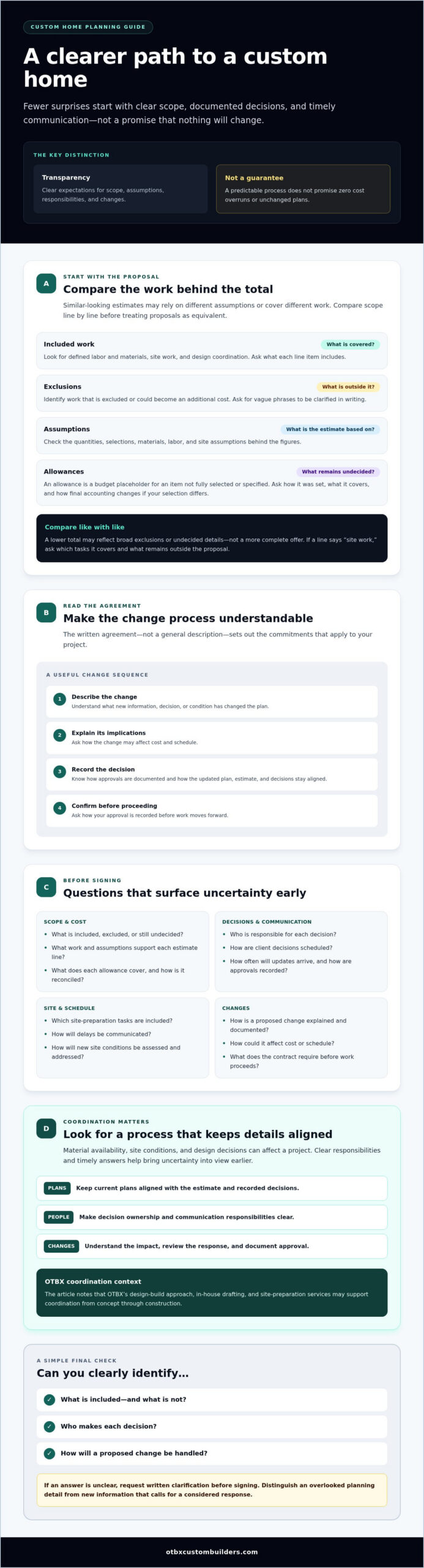
Look for a process that keeps the current plans, estimate, and decisions aligned. Ask who is responsible for each decision, how often you’ll receive updates, and how approvals are recorded. If a detail changes, you should know how the builder will describe the change, explain its implications, and document your approval before proceeding. Check the written agreement for actual commitments instead of relying on a general description of the process.
Clear assumptions also make proposals easier to compare. Check whether each one describes the same scope, identifies exclusions, and states which details remain undecided. A lower figure may reflect different assumptions rather than a more complete offer. A neutral overview of builder contracts and change-order processes can provide background on how project expectations are formalized. The terms that apply to your project, however, are the ones in your own agreement.
Use a simple test when evaluating a builder: can you identify what’s included, who makes each decision, and how a proposed change will be handled? If an answer is unclear, ask for written clarification before signing.
An estimate is useful only when you understand what it covers. Builders reviewing the same plans may return different proposals because they’ve made different assumptions about materials, labor, site work, or which tasks are included. Before comparing totals, compare the work behind them.
Similar-looking totals can cover different work. One proposal might include a specified material or site-preparation task while another leaves it out or treats it as an additional cost. A lower total isn’t necessarily better value if it relies on broad exclusions or undecided details.
Check whether the estimate identifies labor and materials, site work, design coordination, and exclusions. Then ask what quantities, selections, and site assumptions support the figures. For example, if a line item says “site work” without defining its scope, ask which tasks it covers and what remains outside the proposal. Request enough detail to compare the same work across estimates.
Mark vague phrases and request written clarification before comparing offers. The FTC home improvement guide also offers general advice on reviewing written agreements and payment terms. Use it as a consumer reference, then confirm the commitments specific to your project in the builder’s documents.
An allowance is a budget placeholder for an item that hasn’t been fully selected or specified. Ask how the amount was determined, what it covers, and how the final accounting changes if your selection differs from the allowance. For example, clarify whether the allowance covers only the item or other related costs as well. A clearly explained allowance shows which choices remain open and where additional cost may arise.
A contingency is a planning provision for costs that may emerge as the project develops. It isn’t a guaranteed spending amount or a promise that all unforeseen work will fit within it. Ask how the provision is handled, who can authorize its use, and how any impact is reported.
Before signing, confirm who approves substitutions, allowance overages, and scope changes, and how approvals are documented before work proceeds. A custom home builder without surprises should be willing to explain how its estimate is organized, but the actual terms and responsibilities depend on the written agreement. If you’re evaluating a home project, you can discuss your project scope and estimate questions with OTBX as part of your builder comparison.
A contract turns a proposal into documented expectations, but its label alone won’t tell you how much cost visibility or flexibility you’ll have. Compare the scope, pricing basis, documentation, and client review process. A custom home builder without surprises should be prepared to explain how the terms work for your specific project, not just describe the contract by type.
The clearest proposal is not necessarily the one with the lowest initial total. Compare what each builder commits to deliver, which assumptions apply, and how unresolved selections or later changes will be handled.
A fixed-price arrangement may set a price for a defined scope, while a cost-plus arrangement may give the client more visibility into documented costs and add a stated fee. Each approach can allocate cost uncertainty differently, and the details depend on the agreement. If cost visibility is a priority, it helps to understand how an open book contractor for custom homes tracks and reports costs as they develop. Don’t rely on the label alone. Check what can change the price, how costs are documented, and which approvals are required. Ask a qualified professional to review any contract language you don’t understand.
Use the same comparison framework for every proposal. A simple table can make gaps easier to spot:
Ask each builder to clarify unclear entries in writing. This creates a more useful comparison than lining up totals that may be based on different scopes.
A change-order process should explain how a proposed change is described, priced, and assessed for schedule impact. Ask what documentation you’ll receive, who can approve the change, and whether work begins only after the required written approval is recorded. The agreement should also explain how the builder documents resulting adjustments to scope, budget, or timing, so you can track what changed and why.
Before choosing a builder, review a sample change-order document if one is available. Confirm that it matches the process described in the contract. Clear answers help you understand how decisions will be handled when the original plan needs to change.
A builder’s answers can show whether the project process is defined well enough for you to make informed decisions. Ask for clear examples and written documents, not just general assurances. For broader selection criteria, review this turnkey custom home builder buying guide.
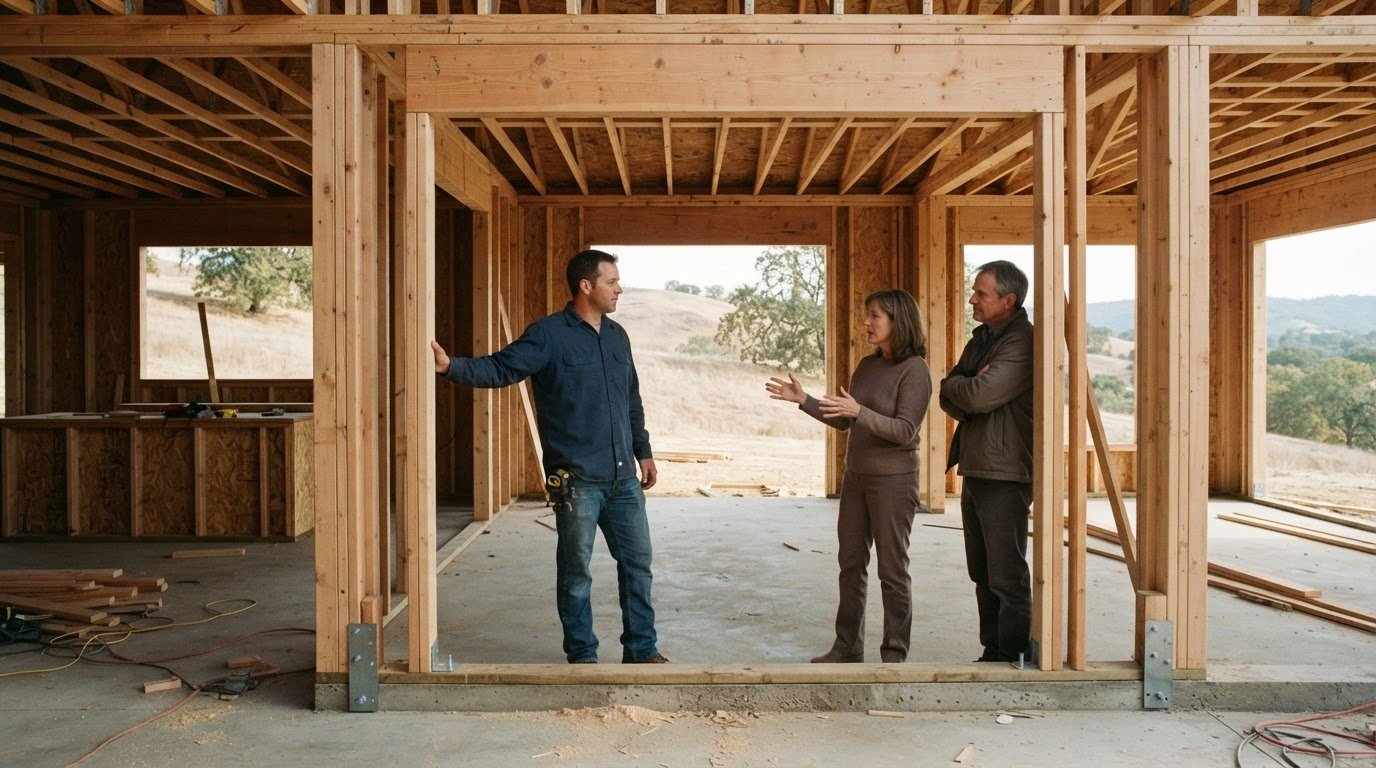
Ask who your primary contact will be, how progress updates are delivered, and how often you should expect them. Request a sample schedule of client decisions, such as when plans call for choices about fixtures or finishes. Find out how the builder will flag an overdue decision and explain any resulting schedule impact.
Ask how unresolved selections, newly identified site conditions, or schedule changes are escalated. If available, request examples of project updates, decision logs, or approval documents with confidential client details removed. These materials can help you see whether information is tracked consistently and presented in a way you can follow.
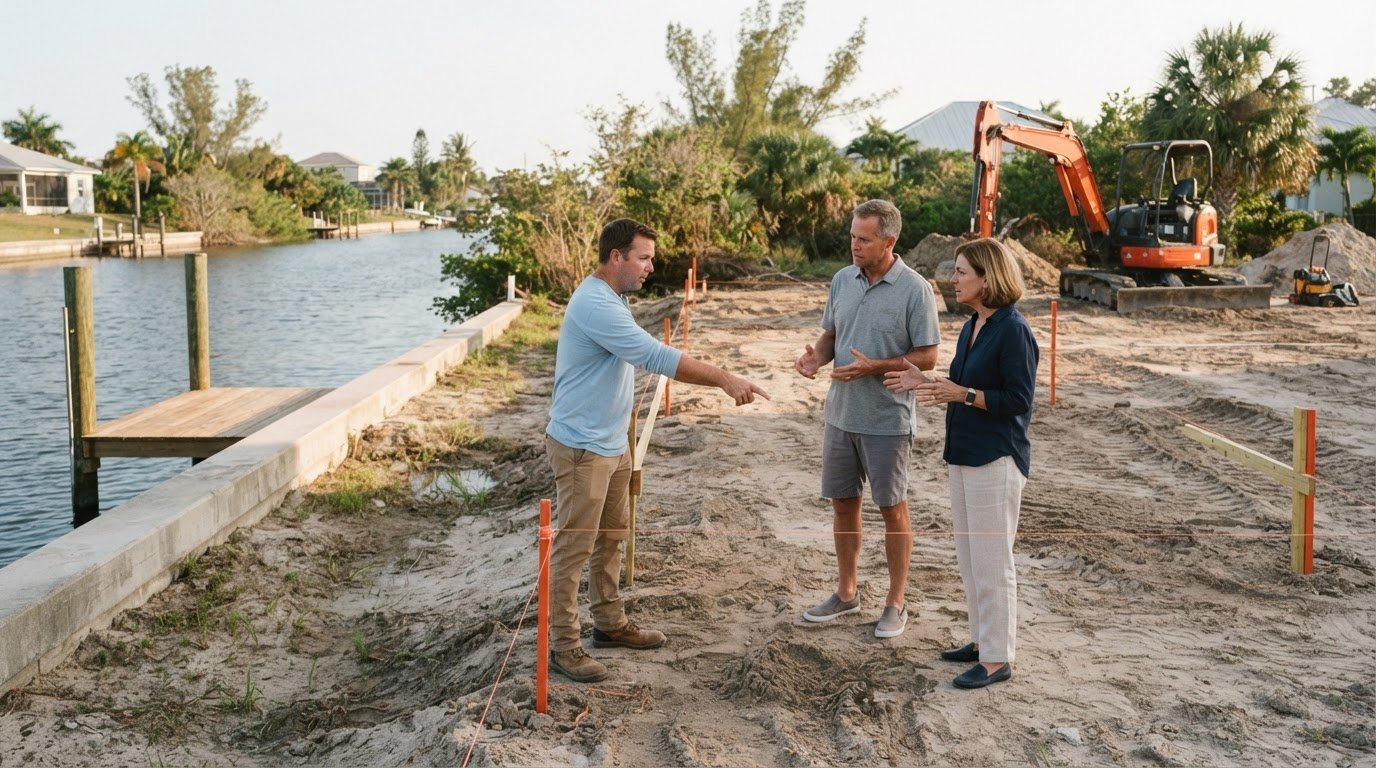
Ask which design, drafting, site-preparation, and construction services are included in the proposed scope, and which are not. Confirm who coordinates any surveys, evaluations, permits, or outside professionals that may be needed. For a coastal home, ask how site assessment and permitting responsibilities are coordinated, then verify applicable requirements with the relevant local authorities or professionals. Requirements differ by location, so don’t assume a process used elsewhere applies to your property.
For additional site-planning context, review guidance that addresses conditions and considerations relevant to your property. Treat general resources as background, not as a substitute for confirming project-specific conditions and local requirements.
Keep a written record of the answers and compare them across builders. Focus on what each builder commits to document, who owns the next step, and how you’ll be told when a decision or new finding affects the plan. This is a practical way to assess whether a custom home builder without surprises has a communication process that matches your expectations.
If you’re weighing your project scope and process expectations, discuss them with OTBX Custom Builders, LLC.
OTBX Custom Builders, LLC describes its Coastal Dream Home Advantage as an approach that guides clients from concept through construction. The company provides turnkey design-build contracts for custom and stick-built homes, along with in-house drafting and site excavation and preparation. Connecting design and construction planning can help bring decisions into the conversation early, but it doesn’t replace the need to confirm scope, costs, and responsibilities in writing.
Use the same checklist you would with any builder: ask what the proposal includes, which assumptions inform the estimate, how selections and changes are approved, and how project updates are shared. A coordinated process is most useful when its practical steps and commitments are clear to you.
Design decisions can affect construction planning, so discussing them together may help surface questions before they become urgent. OTBX Custom Builders, LLC offers architectural drafting, blueprints, AutoCAD drafting and design, and floor planning services. Ask which services apply to your project, who handles revisions, and how you’ll review and approve plans. Confirm responsibilities and deliverables in your project documents rather than assuming they are included.
OTBX Custom Builders, LLC also provides site excavation and preparation. Ask how that work is addressed in the proposed scope and what site information is needed to develop the estimate. These services are useful points to discuss, not guarantees of a particular cost or schedule.
A little preparation can make an initial discussion more productive. Bring available property information, preliminary plans if you have them, and a short list of priorities for the home. Note questions about budget assumptions, site conditions, design choices, and how you prefer to receive project updates.
These questions help you understand the proposed process before making a commitment. They also give you a practical basis for deciding whether OTBX Custom Builders, LLC’s approach fits your expectations for a custom home builder without surprises. To discuss your goals and learn more about the proposed process, discuss your custom home project with OTBX Custom Builders, LLC.
A more predictable home-building experience starts before construction. Compare proposals by scope and assumptions, not just totals, and confirm how allowances, approvals, and changes will be documented. Clear communication and written expectations can’t prevent every change, but they can help you understand decisions as they arise.
Choosing a custom home builder without surprises means looking for a process that makes responsibilities and open questions visible. OTBX describes its Coastal Dream Home Advantage process as guiding clients from concept through construction. Its services include custom home construction, in-house drafting, and site excavation, which you can discuss alongside your project scope and expectations.
Bring your priorities and questions to the conversation, then take time to review the proposed process and written commitments. Discuss your custom home project with OTBX to learn more about how its approach may fit your plans. A thoughtful start can help you move forward with greater clarity and confidence.
No builder can reliably promise that nothing will change during a custom home project. Site conditions, product availability, and evolving design choices may affect the plan. A custom home builder without surprises focuses instead on making scope and assumptions clear, communicating new information promptly, and documenting how proposed changes affect the work. Before signing, ask what the contract says about unexpected conditions, approvals, costs, and schedule impacts.
Compare the work each estimate includes, not just the totals. Check labor, materials, site work, exclusions, quantities, and assumptions, then identify selections that remain undecided. For example, one proposal may include site preparation while another lists it separately. Ask builders to clarify vague entries in writing and align the scope as closely as possible before comparing prices. This helps reveal whether differences come from pricing or from different proposed work.
A useful contract should clearly describe the project scope, pricing basis, included work, exclusions, and assumptions. It should also explain how allowances are accounted for, how changes are proposed and approved, and how schedule updates are handled. Confirm which plans and other documents form part of the agreement. Contract terms vary, so ask questions about unclear language and consider having a qualified professional review the agreement before you sign.
The builder and client should follow the change process set out in their written agreement. Before approving a change, ask for a description of the added, removed, or revised work, along with its cost and schedule implications. Confirm who must approve it and how that approval is recorded. Don’t rely on a verbal understanding alone. The contract determines the specific steps and responsibilities for managing a scope change.
No. An allowance is a budget placeholder for an item that hasn’t been fully selected or specified, not a guarantee of its final cost. Ask what the allowance covers, how its amount was set, and how the final accounting changes if your selection costs more or less. Also clarify how substitutions and overages are approved. The written agreement should explain how allowances apply to your project.
Coastal site conditions may affect planning, site preparation, and the work required for a particular property. An initial assessment can inform decisions, but some conditions may only become clear as work progresses. Ask what site information the estimate assumes, which site-preparation tasks are included, and who coordinates any needed evaluations or permits. Confirm applicable requirements for your property with the relevant local authorities or qualified professionals.
Ask who your main contact will be, how progress updates are delivered, and how often you can expect them. Find out how the builder communicates delayed decisions, new site findings, or schedule changes, and whether updates explain the cause and next steps. Ask for a sample decision schedule so you can see when selections are needed. Confirm how approvals and schedule changes are documented in your project records.