When you search for a “turnkey custom home builder,” the word “turnkey” can sound like a promise that one company will handle everything. But the…
When you search for a “turnkey custom home builder,” the word “turnkey” can sound like a promise that one company will handle everything. But the label doesn’t tell you who manages design, planning, site work, construction, or communication. Compare the actual scope behind each proposal, not just the wording in its headline.
This guide explains what turnkey service can mean in practice, how to ask builders consistent questions, and what to check before work begins. You’ll learn how to review a written scope, compare builder-led and separate design and construction teams, and clarify responsibilities, costs, and changes. OTBX Custom Builders, LLC’s Coastal Dream Home Advantage is a process intended to guide clients from concept through construction. Ask what stages and deliverables it covers for your project, then compare those details against your needs.
“Turnkey” describes how a builder proposes to deliver a project, not a standard package with guaranteed inclusions. One builder may coordinate drafting and construction through a single process; another may expect you to hire or manage some professionals separately. The label alone won’t identify who is responsible for each decision, handoff, or cost.
Quotable definition: Turnkey service is a builder’s proposed way of coordinating a home project. The written scope and signed agreements define what is actually included.
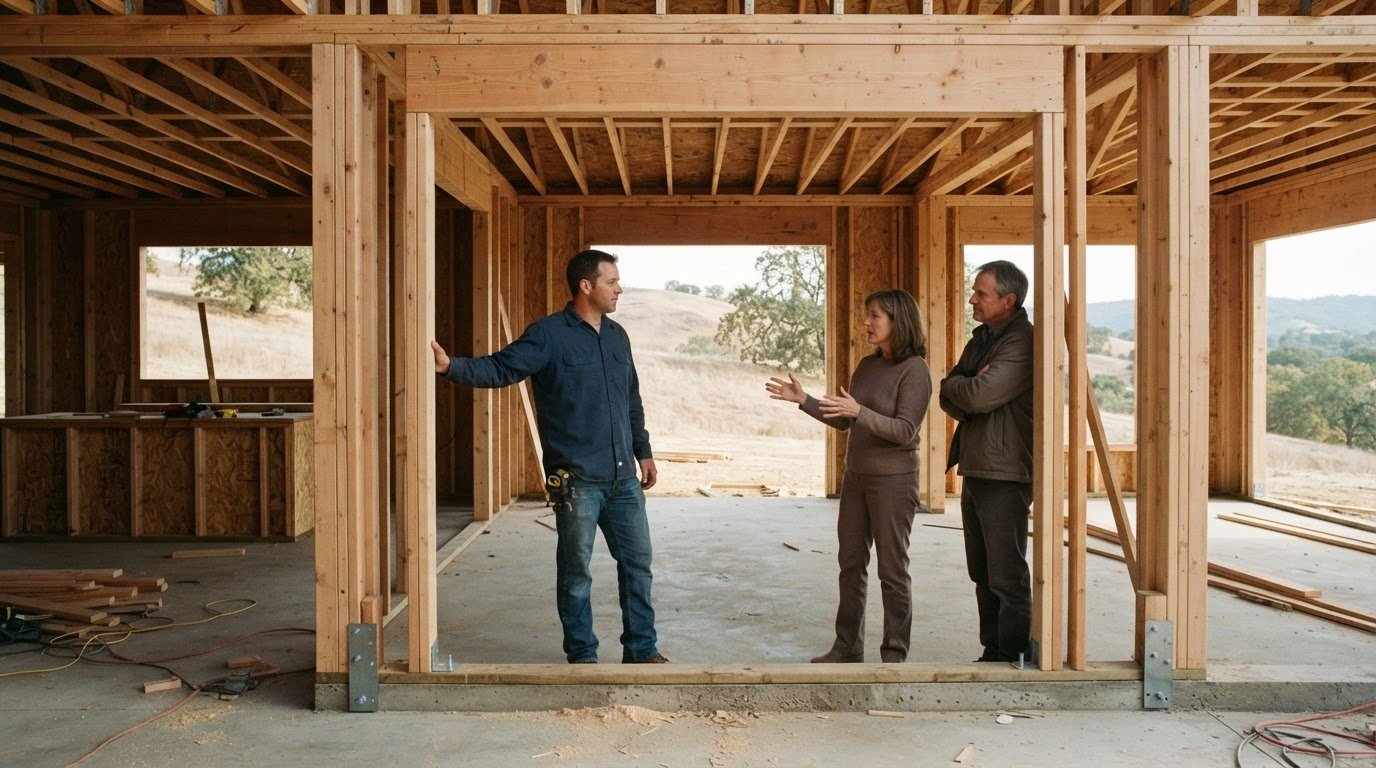
A turnkey agreement may bring design coordination, planning, and construction under one builder-led relationship. With separate professionals, you may need to coordinate communication and clarify how one team’s work passes to the next. A general contractor typically manages vendors, oversees the worksite, and communicates with project parties, but the duties in your arrangement depend on the agreement.
Potential responsibilities include developing the concept, preparing or coordinating drawings, planning construction, and organizing the build. The division of work varies. Ask who prepares each deliverable, who reviews decisions with you, and who coordinates outside professionals.
OTBX Custom Builders, LLC offers residential drafting, blueprints, AutoCAD drafting and design, floor planning, and custom and new-home construction. These services may support project coordination, but don’t assume they are all included in a particular build. Ask for a written breakdown of responsibilities, deliverables, and handoffs. The phrase “turnkey custom home builder NC” is a search term, not proof of a builder’s scope or service availability.
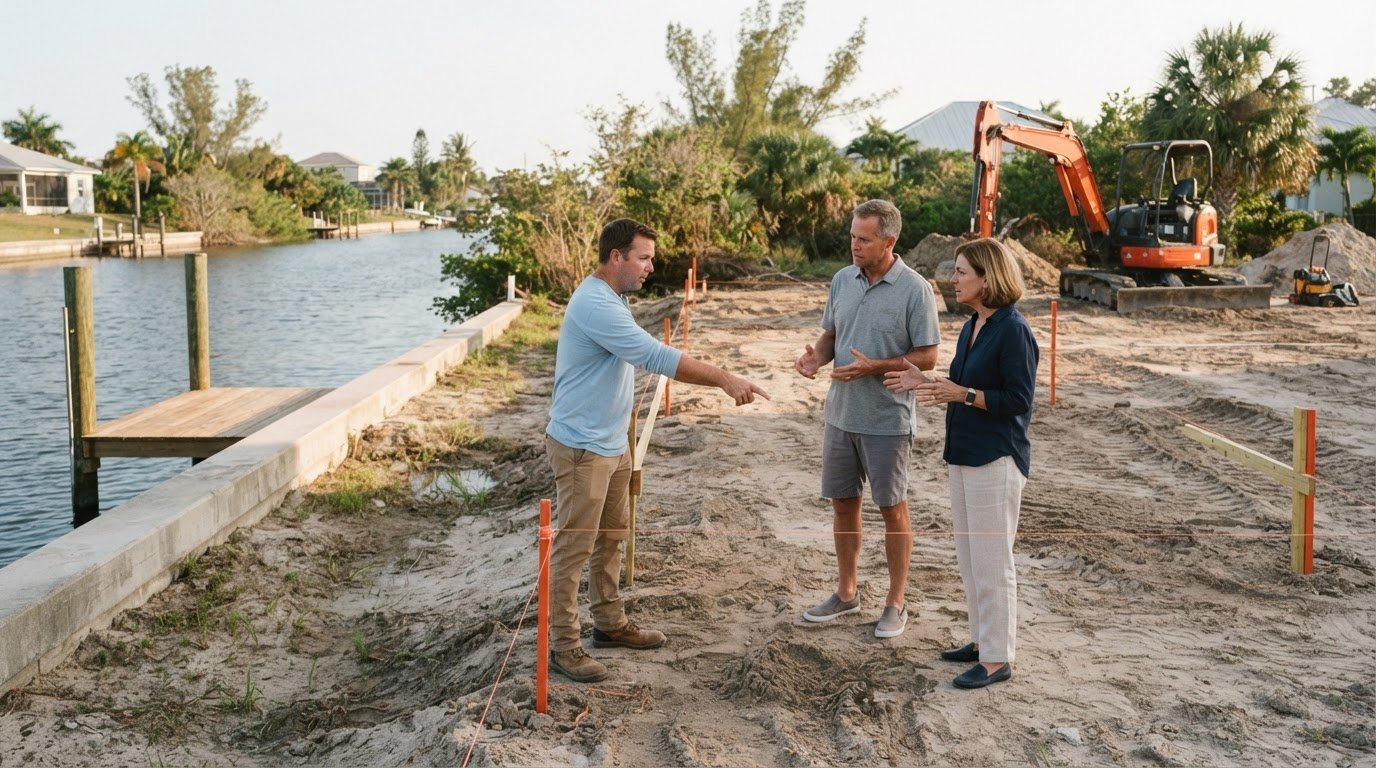
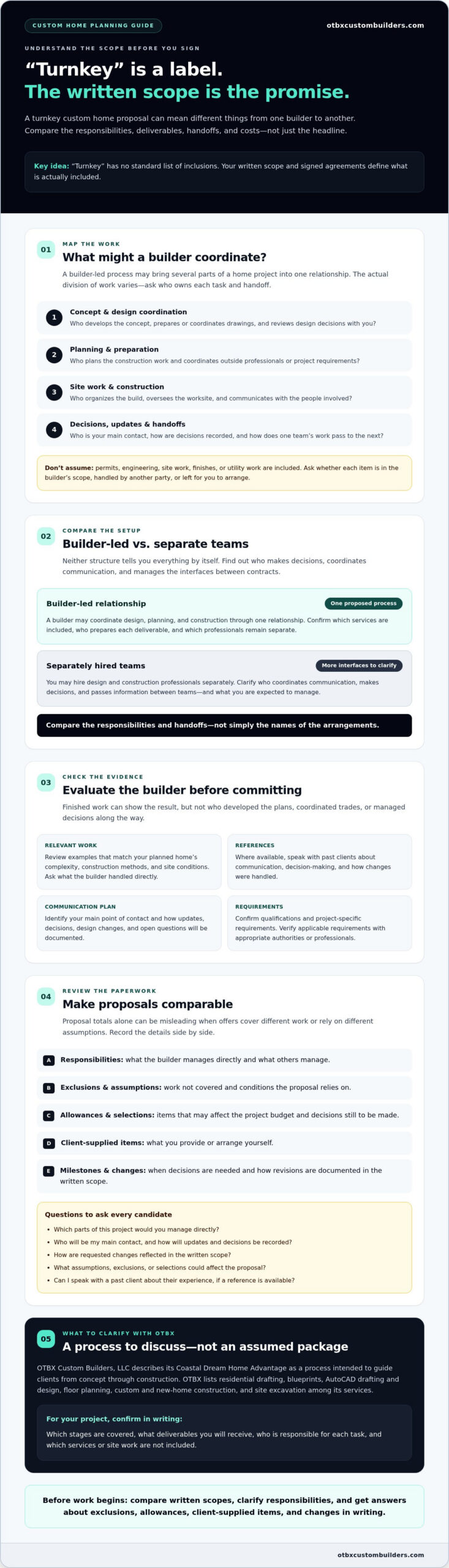
Don’t assume permits, engineering, site work, finishes, or utility work are included. For each item, ask whether it is in the builder’s scope, handled by another party, or left for you to arrange. Site conditions may affect the work a project requires, so ask how those needs will be identified and discussed.
OTBX lists site excavation among its services. Confirm whether it applies to your project and what the work would cover. Before comparing proposals, create a shared checklist of exclusions, allowances, owner-supplied items, and decisions you’ll need to make. Get the answers in writing so you can compare proposals on the same basis.
Look for experience that matches the work you’re planning, including comparable home complexity, construction methods, and site conditions. A portfolio shows finished results, but not who developed the plans, coordinated the trades, or managed decisions during construction. Ask what the builder handled directly and what other professionals or the client managed.
Assess communication before signing. Identify your main point of contact, how decisions will be recorded, and how project updates will be shared. Ask how the team documents design changes, allowance selections, exclusions, and unresolved questions. Clear answers can help you decide whether the working relationship suits your needs.
Request relevant project examples and, where available, references you can speak with. Ask former clients about communication, decision-making, and how the builder handled changes. Confirm the company’s qualifications and which project-specific requirements apply to your plans. Verify applicable requirements with the appropriate authorities or professionals. A search for a turnkey custom home builder NC can help you find candidates, but relevant work and clear answers are more useful than the label alone.
Use a side-by-side comparison to record each proposal’s responsibilities, exclusions, allowances, decision milestones, and assumptions. Don’t compare totals alone: proposals may cover different work or rely on different assumptions. Ask how revisions are documented and what happens if selections are still open. This makes gaps easier to spot than relying on the headline price.
Ask every candidate the same questions:
Record the answers and follow up on anything unclear. OTBX Custom Builders, LLC offers custom and new-home construction alongside in-house residential drafting services. You can review OTBX’s custom home services as one point of comparison, then confirm directly which services and responsibilities fit your project.
A builder-led model brings design coordination and construction under one working relationship, although the exact services vary. With separate professionals, you may hire a designer and contractor independently, then coordinate how drawings, decisions, and responsibilities pass between them. Neither approach is automatically better. The right fit depends on how involved you want to be, whether you already have a team, and who will manage each handoff.
| Area | Builder-led model | Separate professionals |
|---|---|---|
| Coordination | The builder may coordinate design inputs with construction planning. | The owner may need to align the designer, contractor, and consultants. |
| Decision ownership | Responsibilities depend on the proposal and agreements. | Each professional may own decisions within their separate scope. |
| Communication | A defined contact may help route questions, if the process provides one. | The owner may communicate across multiple contacts. |
| Contract interfaces | Some work may be covered through a builder relationship; check what is excluded. | Separate agreements can define distinct scopes and handoffs. |
A turnkey label doesn’t guarantee fewer risks or a fixed final cost. Unresolved selections, site conditions, scope gaps, and changes can still affect a project. Clear written agreements should identify responsibilities, communication paths, and how revisions are handled. A turnkey custom home builder NC may offer a coordinated process, but review the actual roles and documents before relying on the label.
Early coordination can connect drawings, site preparation, and construction planning before work begins. For example, the team can raise questions about how a plan fits the site before they become decisions on the worksite. A defined point of contact may simplify communication, but ask who resolves conflicts between design choices, site conditions, and construction requirements, and how the resolution is recorded.
If you already have a designer you want to retain, or prefer to choose consultants directly, separate professionals may suit your approach. You may then be responsible for scheduling conversations, sharing updated plans, and resolving gaps between agreements. Before choosing a model, map who hires each professional, who approves changes, and who is accountable when scopes overlap. Compare the team structure, not just the proposal language.
Before signing, check that the proposal describes the work clearly enough to show what the project budget is based on. Costs depend on the documented scope and project-specific conditions, including the property and your selections. A proposal total is difficult to assess if you can’t tell what it includes, what it leaves out, or which items are undecided.
Ask the builder to identify included work, exclusions, allowances, and items you’re expected to supply. For each allowance, clarify what it covers and how selections above or below that amount will be recorded. Confirm how proposed changes are priced, who must approve them, and whether approval is required before changed work proceeds.
Record selection deadlines and decision owners, too. A written list of choices, such as finish selections or plan revisions, makes it easier to see what remains open and who needs to act. Have qualified professionals review contractual and regulatory questions specific to your project. Don’t rely on a verbal explanation to resolve an unclear term.
Before comparing or finalizing proposals, make a checklist of known property constraints and open questions. Include:
For each item, ask who will gather the information, who will assess it, and whether related work is included or separately scoped. If site excavation or drafting services are relevant, confirm the specific deliverables and responsibilities in writing. Site conditions can raise project-specific questions, so consult qualified professionals about the property and its requirements. For broader planning context, see the complete coastal home construction guide.
Use the same checklist with every candidate, including a turnkey custom home builder NC. You can also review OTBX’s custom home construction services and confirm directly which services, responsibilities, and project details apply.
OTBX Custom Builders, LLC describes its Coastal Dream Home Advantage as a process intended to guide clients from concept through construction. It provides a starting point for discussing how planning and building may connect. Ask which stages the process covers, what you’ll receive at each stage, and which responsibilities remain with you or other professionals. A project-specific scope is still essential.
OTBX offers residential drafting, blueprints, AutoCAD drafting and design, floor planning, and custom and new-home construction. Having drafting and construction services within the same company may support coordination, but it doesn’t establish which services are included in your project or guarantee a particular outcome. Confirm how the process applies to your plans and property. If site excavation or marine construction may be relevant, ask whether that work is available and how it would be defined in the scope.
Ask specific questions to understand the working arrangement rather than making assumptions based on the process name:
Request written answers. They give you a clear basis for deciding whether the process matches the coordination and accountability you want. People searching “turnkey custom home builder NC” should apply the same standard: assess the documented services, not just the phrase used to describe them.
Before an initial conversation, gather available property information and note your goals, priorities, open site questions, and preferred features. Bring questions about scope, drafting, decision-making, and communication. Concrete information helps both sides discuss project fit without relying on assumptions.
Confirm current project eligibility and service availability directly. If you’re considering a custom home, you can discuss a custom-home project with OTBX and clarify the process, scope, and fit for your plans.
The right turnkey partner is defined by more than a label. Compare who handles each responsibility, what the written scope includes, and how the builder documents decisions and changes. Those details help you assess whether the process fits your project and how involved you’ll need to be.
For anyone considering a turnkey custom home builder NC, OTBX’s in-house residential drafting and custom-home construction services may be relevant when discussing coordination. Its Coastal Dream Home Advantage is a concept-to-build process, so ask which stages and deliverables it includes for your project.
Bring your property information, goals, and scope questions to an initial conversation. Discuss your custom-home project with OTBX and confirm project fit and service availability directly. A clear conversation is a practical first step toward choosing a building partner with confidence.
A turnkey custom home builder may coordinate planning, design, and construction, but the term doesn’t define a universal scope. The written proposal should spell out which services are included, what’s excluded, and which items are allowances or owner responsibilities. Ask who manages each phase, whether consultants and site services are included or arranged separately, and how decisions and approvals are documented. Compare the written details rather than relying on the label alone.
No. “Turnkey” doesn’t automatically make a builder responsible for every project need. Review the agreement to see whether design work, permits, engineering, site preparation, utilities, selections, and inspections are included, excluded, or handled by others. Ask who owns each task and how added work or changed requirements will be documented and approved. If responsibilities are unclear, request written clarification before signing rather than assuming the builder will take care of them.
Use the same checklist for each builder: relevant project experience, written scope, exclusions, communication practices, decision responsibilities, and change procedures. Review examples of completed work and ask what each builder managed directly. Request references where available, and confirm qualifications and project-specific requirements with appropriate sources. Compare proposals line by line, including assumptions and allowances. This helps you evaluate a turnkey custom home builder NC by documented responsibilities, not just the service label.
No. The word “turnkey” alone doesn’t guarantee a fixed final cost or prevent changes. The budget depends on the documented scope, assumptions, allowances, property conditions, selections, and approved revisions. Ask how the builder develops the proposal, communicates cost changes, and obtains approval before proceeding with changed work. Before comparing totals, check that proposals cover comparable work and identify unresolved selections or other items that could affect the project budget.
Some builders coordinate design and construction, while others build from plans prepared by separately retained professionals. Confirm who prepares drawings, which design services are included, and how design decisions connect to construction planning. OTBX Custom Builders offers in-house residential drafting and custom-home construction services. Ask which deliverables and project stages apply to your plans, and document the responsibilities of the builder and any other professionals.
Ask what the agreement includes and excludes, who manages each stage, and how changes will be priced, documented, and approved. Clarify how allowances and selections are handled, who coordinates consultants or site work, and how updates and decisions are recorded. Confirm any decision deadlines that affect your responsibilities. Request clear written answers, then have qualified professionals review contractual questions specific to your project before you commit.
Consider how much coordination you want the builder to handle and how much direct control you prefer over design professionals and decisions. A builder-led process may suit owners seeking a connected team, while separate professionals may work better if you already have a designer or want to select consultants directly. Neither model is automatically best. Compare actual roles, communication paths, contract relationships, and your preferred level of involvement before choosing.