Buying the right lot before choosing a builder can secure a location you want, but it can also narrow your building options and expose you to costs…
Buying the right lot before choosing a builder can secure a location you want, but it can also narrow your building options and expose you to costs before construction begins. The pros and cons of buying land before a builder depend on whether the lot suits your plans, budget, and timeline. Buying first gives you time to plan and save; consulting a builder first can help you assess the site and balance land costs against construction needs.
It’s understandable to want to secure a property before it leaves the market, especially when location matters most. The decision is easier when you know what the land allows and what it may take to prepare it for a home. This guide compares the tradeoffs, explains which costs to include in your budget, and outlines the restrictions and site conditions to consider before you commit.
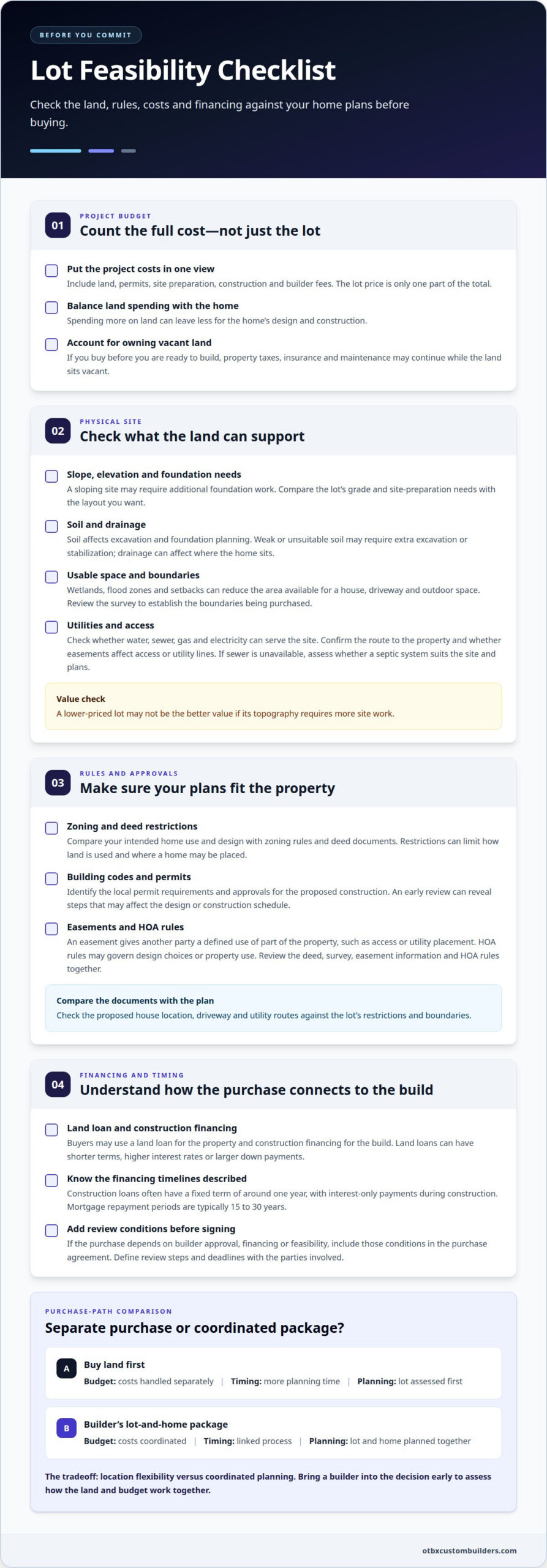
Buying land first can secure a location and give you time to plan, but it separates the purchase from construction decisions. Compare the full site and building budget before you commit.
Budget for land, permits, site preparation, construction, and builder fees as one project. The lot price is only one part of the total. Spending more on land can leave less for the home’s design and construction. Buying before you’re ready to build may also mean paying property taxes, insurance, and maintenance while the land sits vacant.
A lot’s slope and elevation can affect the home’s design and foundation needs. A sloping site may require additional foundation work, increasing construction costs. Compare site-preparation needs with the layout you want. A lower-priced lot may not be the better value if its topography requires more site work.
Buyers may use a land loan for the property and construction financing for the build. Land loans can have shorter terms, higher interest rates, or larger down payments. Construction loans often have a fixed term of around one year, with interest-only payments during construction. Mortgage repayment periods are typically 15 to 30 years, according to the Consumer Financial Protection Bureau. A builder’s lot-and-home package links the lot and build, while separate purchases require coordinating those steps.
If you want the purchase to depend on builder approval, financing, and feasibility, include those conditions in the purchase agreement before signing. Define review steps and deadlines with the parties involved. A feasibility review can assess whether your planned home fits the lot and budget. Financing conditions address whether funding is available, helping align the purchase with the project’s practical requirements.
| Option | Budget | Timing | Planning |
|---|---|---|---|
| Buy land first | Costs handled separately | More planning time | Lot assessed first |
| Builder’s lot and home package | Costs coordinated | Linked process | Lot and home planned together |
Choose based on whether location flexibility or coordinated planning matters more.
A lot’s price and location tell only part of the story. Check zoning, usable space, privacy, utilities, and access against your home plans before purchasing.
Zoning and deed restrictions can limit where and how a home may be built. Compare the rules with your intended use and design before treating a lot as buildable. Lot size matters too: wetlands, flood zones, and setbacks can reduce the area available for a house, driveway, and outdoor space. Privacy depends on the lot’s position, nearby homes, and access routes, not acreage alone.
Soil conditions affect excavation and foundation planning. Weak or unsuitable soil may require extra excavation or stabilization, while drainage can shape where the home sits. Utility access also affects a lot’s practicality. Find out whether water, sewer, gas, and electricity are available at the property, then identify alternatives such as a septic system where sewer service is unavailable. These details matter in site planning before construction starts.
To verify utilities and access, review the lot survey and property records, then ask utility providers whether water, sewer, gas, and electricity can serve the site. Confirm the route to the property and whether easements affect access or utility lines. A survey establishes the boundaries being purchased and helps compare the proposed building area with access routes and utility locations. If sewer service isn’t available, assess whether a septic system suits the site and plans.
For a stick-built home, align the floor plan with the lot’s usable area, grade, and utility routes before finalizing the design. That comparison can clarify whether the property supports your priorities for privacy, access, and the dream home itself.
These rules can determine whether a lot supports your plans, where a home can sit, and which approvals construction requires. Review them before purchasing, while changes to the lot or design are still possible.
Zoning and deed restrictions set limits on how land may be used and where a home may be placed. Building codes and permits govern the proposed construction and its approvals. These checks differ from physical site reviews: a lot can appear suitable yet still have rules that conflict with its planned use or design.
Before committing, compare your intended home and site plan with zoning rules, deed documents, and local permit requirements. A builder can help evaluate the lot and understand zoning, permits, and deeds before purchase. An early review can identify approval steps that may affect the design or construction schedule.
An easement gives another party a defined use of part of the property, such as access or utility placement. It can limit where construction or landscaping fits. HOA restrictions are different: they may govern design choices or property use within a neighborhood. Both can narrow your options, but they apply through distinct documents.
Review the deed, survey, and recorded easement information alongside any HOA rules. Compare those documents with the proposed house location, driveway, and utility routes. If you’re unfamiliar with these restrictions, involving a builder before purchase can help, especially when the lot’s limits could change the home design.
Buying land first can secure a location that matters to your household before it leaves the market. In sought-after areas, developers, investors, and other homebuyers may compete for available lots. If location is your priority, purchasing early can protect that choice while you prepare for construction. The pros and cons of buying land before a builder often come down to whether that location advantage outweighs the cost of owning land before building.
Owning the land also gives you time to shape the project. You can consider home layouts, compare design ideas, and decide how the lot’s boundaries and usable space support your plans. That time can help you find a design that fits the property instead of choosing a house plan first and forcing it onto the site. For example, a wooded parcel may lead you to plan around trees you want to keep.
Buying ahead can give you time to save for construction while you own the land. It may also lock in the land price before you’re ready to build. In growing areas, land can appreciate over time, although appreciation alone is not a sound reason to buy. Paying cash can make purchasing land before construction a suitable choice for some buyers.
There are carrying costs during the wait. Property taxes, insurance, and maintenance can continue before a home is built. Interest rates and loan terms also affect the cost of financing land. Include these expenses in your timeline alongside future permits, site preparation, and construction so the lot doesn’t consume funds needed for the house. The pros and cons of buying land before a builder are easier to weigh when you account for both timing and ongoing ownership costs.
Before purchasing, map out the sequence: secure the lot, review its restrictions and site conditions, refine the design, and set a construction budget. Then compare that plan with your savings and expected timing. If location is your top priority and carrying costs fit your budget, buying early can offer useful flexibility. If the design or total budget remains unsettled, waiting can preserve your options.
Discuss your land and home plans before committing, so the site and intended construction can be considered together.
OTBX Custom Builders, LLC can help when you’re weighing a lot against the home you want to build. Its New Home Construction and custom home services connect the land decision with construction planning. Bring your priorities for location, design, and budget into the conversation so the project can be considered as a whole, rather than treating the lot and home as separate decisions.
If you already own land, discuss how your plans relate to the property. If you’re still considering a purchase, talk through the site and your intended home before committing. Contact OTBX Custom Builders, LLC to discuss your land and home plans.
Before moving forward, define what must stay fixed and what can change: location, privacy, layout, timing, and the share of your budget reserved for construction. This short priority list gives the next planning conversation a clear purpose. It also helps distinguish a lot that merely appeals from one that supports the home you intend to build. A builder can help translate site constraints into design choices and organize the decisions that shape the project.
The pros and cons of buying land before a builder are easier to weigh when you consider the property and building plan together. OTBX Custom Builders offers New Home Construction, custom homes, and Stick built homes, connecting land considerations with a home project. Share the property details and your priorities to discuss how they fit your plans.
Contact OTBX Custom Builders to take the next step. A clear plan can make the decision more manageable, whether you own the land already or are still deciding.
Buying land first lets you secure a property while shaping a home plan around it. You can consider how the home should face, where outdoor living areas could fit, and which features matter most before settling on a design. For example, a wooded lot may make tree preservation a priority. This approach gives you control over property choice, but you still need to evaluate the lot against your intended project.
The main risk is owning land that doesn’t support the home you ultimately want. A narrow building area, difficult access, or costly site work can force design changes or strain the construction budget. You may also pay property taxes, insurance, and maintenance expenses while the lot sits vacant. Before purchasing, connect the property’s known constraints to a realistic project plan and timeline.
Review the permitted land use, deed restrictions, easements, and any HOA rules that apply to the parcel. Then compare those limits with the home’s intended location, footprint, and design. For example, restrictions may affect a driveway or where structures can sit. Ask the relevant local office which zoning and permit requirements apply to your proposed use, since rules vary by jurisdiction.
Consider a boundary survey, soil evaluation, and environmental review focused on the planned building area. Ask that the findings relate to the proposed home footprint, not just the parcel in general. A survey can clarify property lines, while soil information helps assess excavation and foundation needs. Environmental findings can identify features such as wetlands that may affect usable space.
Plan for expenses that arise before and during construction, not just the purchase itself. Property taxes, insurance, and maintenance may continue while the land is vacant; permits and site preparation add project expenses later. Depending on the site, preparation may involve grading, excavation, or utility work. Separate ongoing ownership expenses from construction costs to see how long your budget must support the land before building.
A builder’s lot and home package can simplify coordination by linking the property choice with the building plan. Buying independently can give you more freedom to select a location and decide when to build, but you’ll manage the land decision separately from construction planning. Compare what each option includes, the restrictions attached to the lot, and how much control you want over timing and design.