Don’t assume materials left on site are yours to use if your builder closes. Understanding what happens if your builder goes out of business starts with establishing the project’s status and who owns the materials. Until ownership is clear, avoid moving or using them.
A stalled build can leave you facing unfinished work, outstanding payments, and uncertainty about what comes next. Take practical steps to protect the site and preserve records while you establish the builder’s status and review your contract.
This guide explains how to assess the situation, document materials and payments, and reduce risk when planning a replacement build. It also covers how to vet a builder and set clear contract terms before work begins.
Key Takeaways
- Confirm the builder’s business and project status, then review your contract before deciding how to proceed.
- Document materials, payments, and completed work on site; clarify ownership before moving or using materials.
- Reduce future project risk by reviewing a builder’s experience, permits, bonds, payment structure, and contract terms.
- Watch for signs of financial strain, including unclear payment records or requests for funds that don’t match completed work.
Verifying builders and structuring contracts before signing
Before signing, decide how you’ll verify the builder, document payments, and handle a project interruption. Clear contract terms also help you assess unfinished construction and potential claims if the builder closes.
-
Address termination, notice, and insolvency stays
Review the contract’s termination clause, required notice method, cure period, and treatment of insolvency. A business closure alone doesn’t establish whether your agreement has ended or what notice is required. If the builder has filed for bankruptcy, check whether a court order affects termination or further work before hiring another contractor. Keep notices, payment records, and replies together.
-
Check potential insurance and recovery fund claims
Ask for the builder’s insurer and policy details, then determine whether the policy could cover the specific loss. An insurer’s existence doesn’t mean every unfinished project or unpaid bill is covered. Don’t treat homeowners insurance as automatic protection against a builder’s bankruptcy; review covered causes and exclusions, especially for physical damage. Some states have home construction recovery funds for unfinished work, but investigations and payouts may take time. Eligibility and claim steps depend on each state fund’s rules.
- Contact the building department that issued the permits to confirm their status. Ask which inspections are recorded, which remain outstanding, and what documents the next contractor needs. Keep approved plans and inspection records together. Before continuing, the replacement contractor should account for existing work and applicable building-code requirements.
- Review the contract’s scope, payment schedule, change-order process, and dispute terms before approving a replacement contractor. Compare completed work and payments already made with the remaining work. Get the replacement scope and schedule in writing, and clarify responsibility for correcting incomplete or rejected work. Don’t assume the original contract ended automatically; resolve its status before authorizing overlapping work or making further payments.
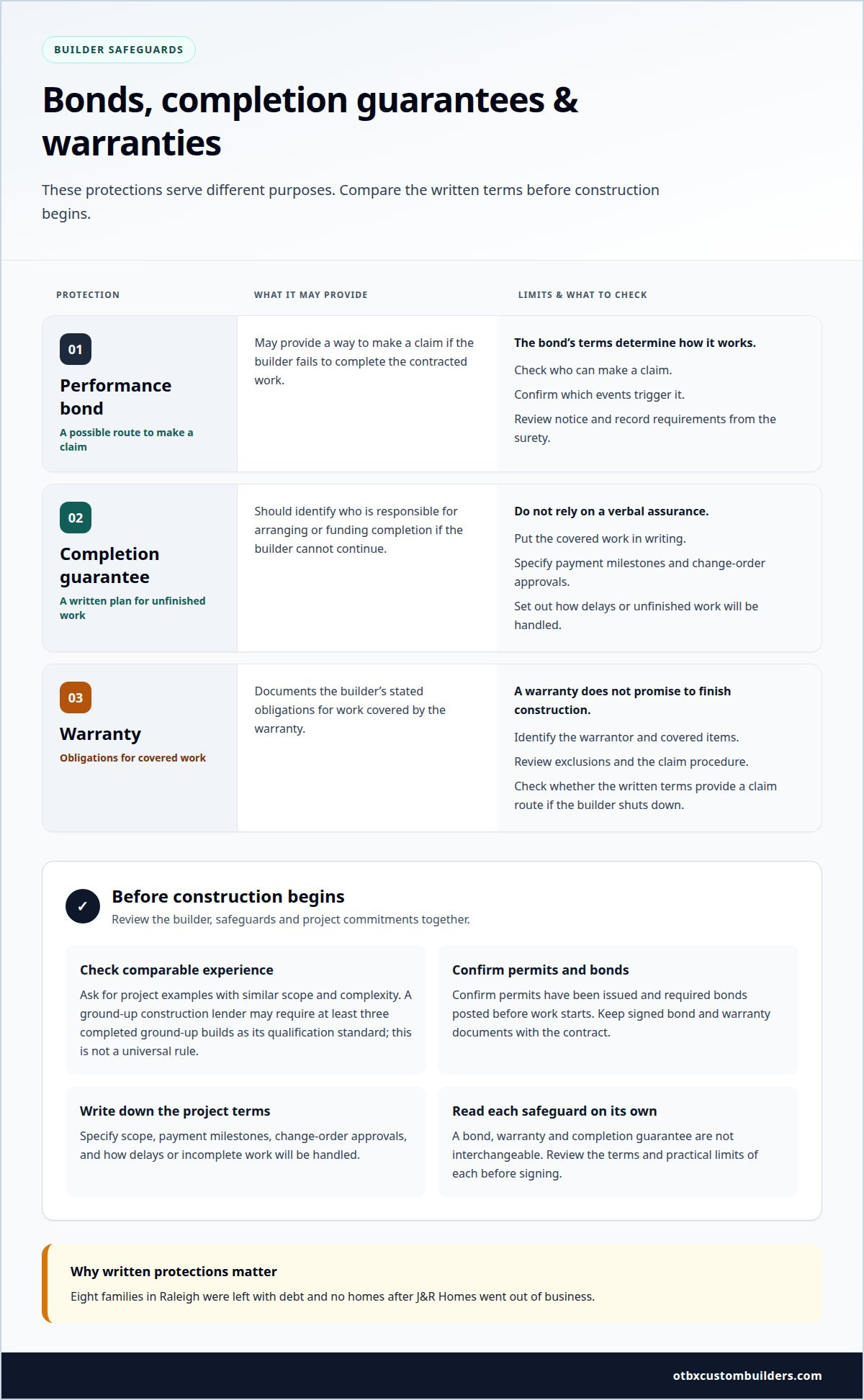
Assess a builder’s completed work, financial safeguards, and written commitments before construction begins. A bond, warranty, and completion guarantee serve different purposes, so review the terms of each.
- Review completed projects and experience with similar construction. A ground-up construction lender may require at least three completed ground-up builds as a builder qualification standard, but that isn’t a universal rule. Ask for project examples showing experience with work comparable in scope and complexity to yours.
- Confirm that permits have been issued and required bonds posted before work starts. A performance bond may provide a way to make a claim if the builder fails to complete the contracted work, subject to the bond’s terms. Check who can make a claim, what events trigger it, and what notice or records the surety requires.
- Put the completion process in writing. Specify the covered work, payment milestones, change-order approvals, and how delays or unfinished work will be handled. A completion guarantee should identify who is responsible for arranging or funding completion if the builder can’t continue. Don’t rely on a verbal assurance that another contractor will simply take over.
- Review the warranty separately from any bond or completion guarantee. A warranty documents the builder’s stated obligations for covered work, but it doesn’t promise to finish construction. Identify the warrantor, covered items, exclusions, claim procedure, and whether the written terms provide a route to make a claim if the builder shuts down.
- Check the practical limits of each safeguard before signing. Eight families in Raleigh were left with debt and no homes after J&R Homes went out of business, illustrating why written protections matter. Keep signed bond and warranty documents with the contract. For a new project, ground-up construction planning can help establish scope and responsibilities before work begins.
Distinguishing insolvency, bankruptcy, receivership, abandonment and default
- Search the builder’s exact legal name in state business records and bankruptcy court records. Bankruptcy filing and legal dissolution are different events. A closed business may still have unresolved legal status, so check official records rather than assuming it has been dissolved. Look for a filed case or dissolution record rather than treating a silent phone line or closed office as proof.
- Distinguish financial distress from formal bankruptcy. Insolvency describes difficulty meeting financial obligations; bankruptcy refers to a court filing. A struggling builder may still be operating, while a bankruptcy filing alone doesn’t tell you whether your project will continue. Record the builder’s status and any notices you receive before deciding what your contract allows.
- Look for signs of a receivership and establish who controls the company or project. A receiver’s appointment can affect who manages assets and communicates about unfinished construction. Confirm the receiver’s authority through formal notices or court records, and direct project questions to the listed contact. A receiver’s involvement is not the same as bankruptcy or dissolution.
- Distinguish abandonment from default by documenting what has stopped and what the contract requires. Abandonment describes work left behind; default concerns a failure to meet a contractual obligation. For example, a general contractor could file for Chapter 7 bankruptcy and abandon a ground-up project. Keep dated site records, project correspondence, and payment documents to show what happened.
- Use the confirmed status to understand who may control project assets and what claims remain. When a builder is insolvent or declares bankruptcy, secured creditors with foreclosure rights are paid before the builder’s buyers. That priority can affect recovery and project decisions. Preserve your contract, payment history, notices, and evidence of completed work before making commitments about unfinished construction.
Choosing a builder and spotting financial warning signs
- Review the builder’s business identity, completed projects, and references before signing. Compare the legal name on the proposal with the names on the contract and payment instructions. If they differ, request a written explanation. Understanding what happens if my builder goes out of business can inform your planning, but checking who is responsible and receives payments is useful before work starts.
- Ask how the builder separates project funds from operating money. Client funds should be held in a special trust and used only on that client’s jobsite. Request a clear explanation of how each payment is assigned. If invoices or records don’t match your project, pause and resolve the discrepancy before authorizing more funds.
- Track supplier and subcontractor payments against completed work. An unpaid plumber or electrician, despite assurances that invoices were paid, may signal a cash-flow problem. Keep invoices, receipts, and written payment confirmations together. These records can help you identify missing payments early and clarify who supplied materials for your project.
- Compare each payment request with completed work and the contract schedule. A large advance without a clear connection to materials or progress deserves a written explanation. Record the amount, purpose, and expected work before authorizing payment. This creates a useful record if questions arise about project funds or unfinished tasks.
- Watch for repeated schedule changes, unanswered invoice questions, or sudden changes in project personnel. One delay can have several causes, but a pattern deserves a direct written response. Request an updated schedule and an itemized account of outstanding costs. Planning for what happens if my builder goes out of business also means noticing when explanations no longer match progress on site.
- Apply these checks before committing to a new build, not after concerns become urgent. For a project that needs careful scope and budget planning, discuss a custom home project and establish clear responsibilities before construction starts.
OTBX Custom Builders, LLC
OTBX Custom Builders, LLC can help with a new construction project after a difficult builder experience. The company offers New Home Construction, custom homes, stick-built homes, and Dock Construction & Repair. These services are suited to owners preparing to start a new build or plan dock work, not to homeowners seeking a legal remedy or a guarantee for unfinished work.
Before moving forward, organize your project records, confirmed decisions, and priorities. A clear scope and consistent communication help set expectations for a new construction relationship. If you’re ready to discuss a future project, contact OTBX Custom Builders, LLC to talk through your plans.
Set a steadier course for your next project
A builder’s closure can change how you approach a future project. Knowing what happens if my builder goes out of business can inform your next decisions, but resolving an existing contract and starting new construction are separate matters. Keep those steps distinct, and define the new project’s scope, responsibilities, and communication expectations before work begins.
For a future build, OTBX Custom Builders offers New Home Construction, custom homes, and stick-built homes. A clear conversation about your plans can help establish whether a new project fits your needs. Contact OTBX Custom Builders, LLC to discuss your next steps. You can move forward thoughtfully, with a clearer foundation for the work ahead.
Frequently Asked Questions
Can I keep and use materials already on my property?
Not automatically. First establish who owns the materials. Check purchase invoices, delivery records, and your contract to determine whether you or the builder paid for them. Photograph materials and labels, and keep receipts with your project records. Avoid removing or installing disputed items until ownership is clear, since changing their condition or location can complicate a later claim.
Can I use the 10% holdback to hire the replacement builder?
Don’t assume a 10% holdback is available for replacement work. Holdback rules depend on the applicable state law and contract, while construction loan funds may remain under lender control. Ask the lender to explain which funds are available, what conditions apply, and whether a revised draw plan is needed. Keep holdback, lender, and replacement-contractor accounting separate.
Can unpaid subcontractors make me pay twice?
An unpaid subcontractor can file a mechanics’ lien against the property to secure an unpaid balance. That doesn’t automatically mean you owe the same amount twice, but an unresolved lien can create an obstacle at closing. Compare subcontractor invoices with your payment records, and keep lien-release forms for subcontractors as they’re paid. Identify disputed balances before releasing more funds.
How do I recover an overpayment from a bankrupt builder?
Gather the contract, proof of payments, invoices, and records of completed work, then follow the claim instructions in the bankruptcy notice. A documented claim can establish what the builder owes you. Recovery depends on available assets and creditor priority: secured creditors with foreclosure rights are paid before the builder’s buyers. Keep copies of every filing and response.
How long does it take to replace a general contractor on a ground-up construction loan?
There’s no fixed timeline; the lender’s review and the project’s condition drive the process. The lender may reassess remaining hard costs, approve a replacement builder, and restructure draw allocations. Prepare an updated budget, progress records, and a proposed completion scope to support the review. The replacement contractor’s qualifications and unresolved project costs can also affect approval and funding.
Should I immediately terminate the builder?
Don’t terminate solely because work has stopped or the builder’s office has closed. First review the agreement’s termination, notice, and cure provisions, then establish whether a bankruptcy filing or court order affects the project. Keep communications and site records, and avoid authorizing overlapping work until you understand the contract’s status. A rushed notice can create disputes about rights and remaining payments.