The right builder doesn’t just follow a plan; they listen, communicate clearly, and work well with the people shaping your project. Finding a…
The right builder doesn’t just follow a plan; they listen, communicate clearly, and work well with the people shaping your project. Finding a trustworthy home builder means looking beyond a polished portfolio to assess local knowledge, how decisions and updates are handled, and whether the builder can coordinate with your project team.
It’s reasonable to want clarity before committing to a major build. You should understand how the work will proceed, who will communicate with you, and how your plans will be carried through construction.
This guide explains how to assess a builder’s experience with local sites and conditions, discuss communication expectations, and evaluate their ability to collaborate with your designer and other project professionals. Use these practical checks to identify a working relationship built on clear expectations and steady coordination.
Use these steps to assess how a builder communicates, organizes work, and supports clients. A practical approach to finding a trustworthy home builder starts with clear expectations and evidence from completed projects.
Ask how often updates arrive, who sends them, and which channels the builder uses. Find out how design decisions, budget changes, and schedule adjustments are recorded and shared with your project team. A professional builder should explain the construction process and schedule in plain language. Before work begins, the written estimate and detailed contract should define the work, exclusions, and payment schedule.
Ask: Who will be my main contact? How are changes approved? What happens if a milestone shifts? Vague answers about updates or costs can make coordination difficult.
Review how each builder organizes project decisions, documents, and schedule updates. Ask for a specific example, such as how a plan change is recorded and shared with your team. Community involvement and professional organization memberships may indicate engagement with the building industry. Ask how those activities inform the builder’s work.
Real estate sections, home shows, and open houses can help you see which builders are active and what they build. Treat listings as a starting point, then assess each builder’s process and fit for your project.
Ask each builder to explain warranty coverage in writing, including how to report an issue and who handles follow-up after construction. Terms and service processes vary, so compare the written details. Ask former clients whether the home met expectations for features, construction, budget, and timing. This adds useful context when finding a trustworthy home builder.
Ask for contact details for former clients. If a builder cannot provide references, treat that as a reason to ask more questions. Vague answers about post-construction service also merit discussion.
Ask for the builder’s business license and proof of workers’ compensation and liability insurance. Compare the business name across these documents and the proposed contract. Requirements vary by state, so consult the relevant state licensing authority for applicable records. When working with OTBX Custom Builders, LLC, these checks provide a practical foundation for finding a trustworthy home builder.
Assess whether a builder understands the conditions affecting your project site. Local knowledge is useful when it informs site planning, permit coordination, and choices suited to the property’s climate.
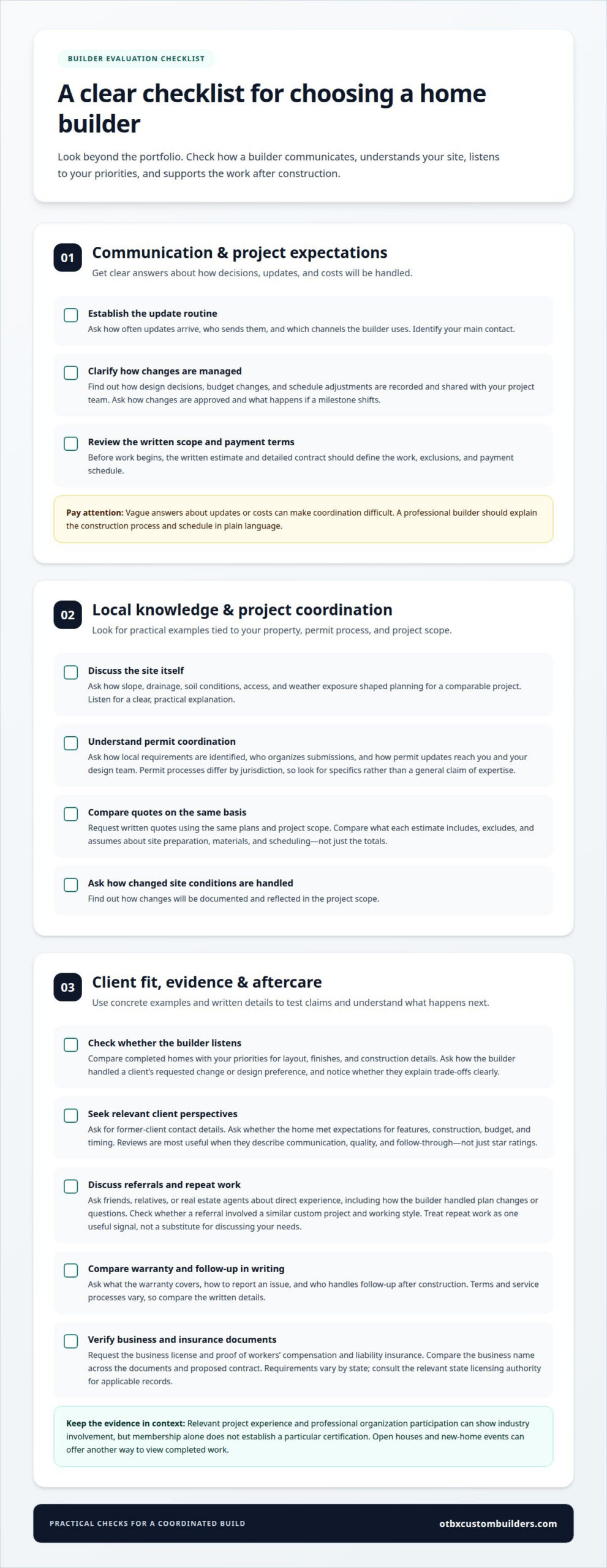
Use examples of past work and conversations with former clients to assess how a builder responds to individual priorities. Look for specific examples, not polished claims alone.
Ask friends, relatives, and real estate agents about builders they know through direct experience. Find out what the builder did when plans changed, questions arose, or expectations needed clarification. Referrals offer useful context, but another person’s priorities may differ from yours. Ask whether the recommendation reflects a similar custom project and working style.
Ask whether former clients have returned for another project or referred others. Treat repeat work as one useful signal, not a substitute for discussing your own needs. A builder’s longevity can suggest financial stability and the ability to address problems after construction, but it doesn’t establish either by itself.
Speak with former clients about whether the builder listened throughout design and construction. Ask for examples: Did the finished home reflect the original priorities? Were choices and changes explained clearly? Did the client feel heard when concerns arose? Specific answers help distinguish attentive collaboration from a smooth-sounding sales conversation.
To understand project payment practices and subcontractor coordination, ask how payments are documented and subcontractor invoices tracked. Discuss the builder’s business history, too, while remembering that longevity alone cannot prove current financial standing. Clear explanations are more useful than unsupported assurances.
Review licensing and insurance documents before signing. Requirements vary by state, so consult the state licensing authority for applicable records and rules.
OTBX Custom Builders, LLC offers new home construction, including custom and stick-built homes. Its Coastal Dream Home Advantage Process guides homeowners through concept, design, construction, and move-in. Homes are custom-designed, with no two designs alike, and built to withstand North Carolina’s coastal environment.
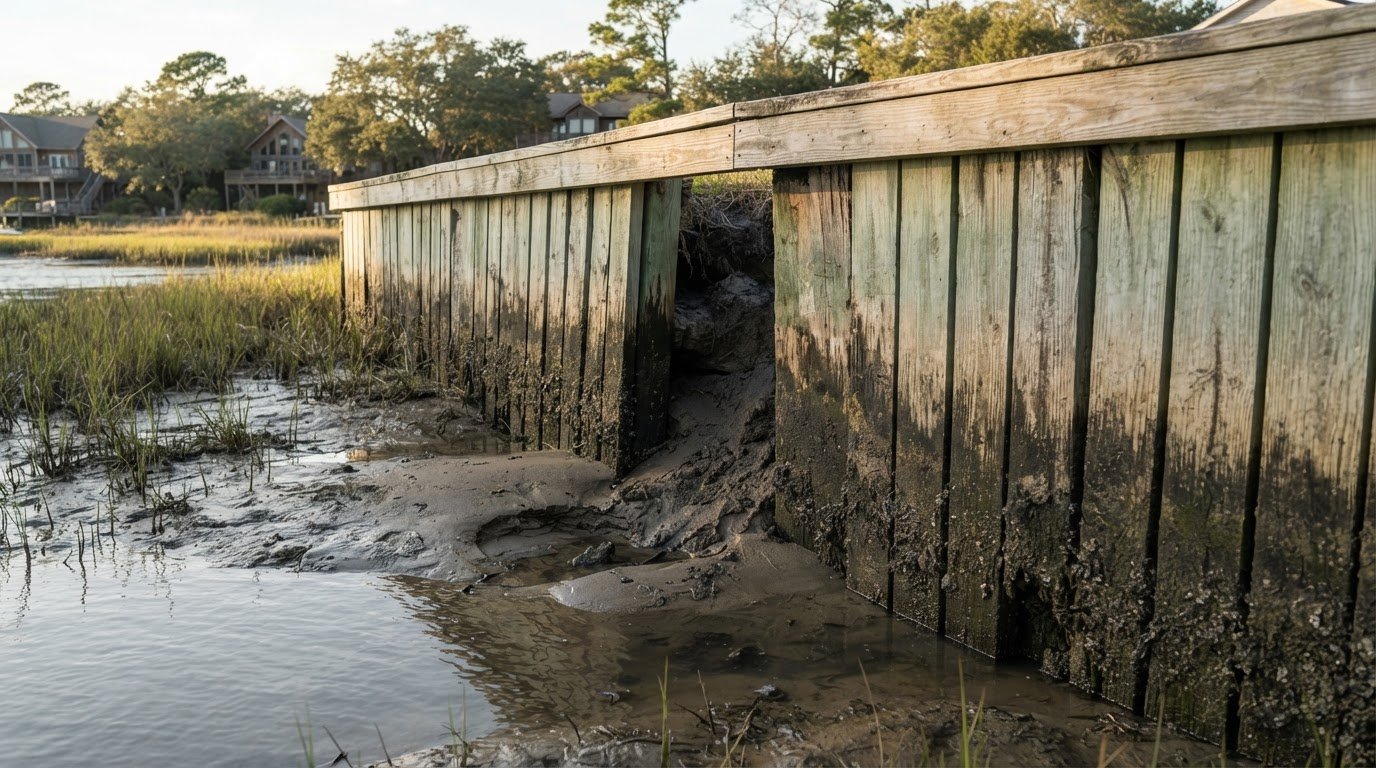
Consider OTBX Custom Builders, LLC when you’re planning a new custom home and want one builder involved in design and construction. Bring your priorities, plans, and questions about the site and project team to the discussion. For a project that includes a dock, OTBX Custom Builders, LLC also offers dock construction and repair.
Contact OTBX Custom Builders, LLC to discuss your new home project.
Before moving ahead, write down what matters most in your home project. Note the spaces and features you want, the decisions where you need guidance, and how you prefer to stay involved. This gives your first project conversation a practical focus and helps you explain what a good working relationship looks like.
Finding a trustworthy home builder does not require having every detail settled. Start with clear priorities and make room for informed discussion as the plans develop. Raise your questions, share the constraints that matter, and take time to understand how the proposed process fits your goals.
When you’re ready to discuss your project, contact OTBX Custom Builders. A clear starting point can help turn your ideas into a focused conversation and give you confidence about the next step.
Yes. OTBX Custom Builders, LLC builds new homes, including custom and stick-built homes. The company guides homeowners through design and construction, helping turn project plans into a completed residence. If you’re considering a new build, bring your priorities, plans, and questions to an initial conversation. That gives both sides a clear starting point for discussing the project’s scope and fit.
Compare direct references, detailed reviews, and available public records rather than relying on one source. Ask former clients what happened when concerns arose, then look for similar themes in independent reviews. Search the relevant state licensing authority’s records for disciplinary or complaint information. Focus on dates, documented outcomes, and the builder’s response, not simply the presence of a complaint or a single positive testimonial.
Compare bids against the same plans, specifications, and project scope. Check whether each estimate identifies materials, site work, allowances, exclusions, and how changes are priced. A lower total may reflect a narrower scope or omitted work, so ask for the difference in writing before comparing totals. For example, one bid may exclude grading while another includes it, making the headline figures misleading.
Set out permit and inspection responsibilities in the written agreement, because requirements and processes depend on the project location. Ask for a project-specific list of expected submissions, inspections, and the person coordinating each one. Clarify how inspection results or requested corrections will be shared with you and your design team. This creates a practical record without assuming every jurisdiction follows the same process.