
A luxury-home budget is easier to manage when the agreement, selections, and owner decisions are clear before construction starts. The most useful…
A luxury-home budget is easier to manage when the agreement, selections, and owner decisions are clear before construction starts. The most useful questions to ask a luxury home builder cover the itemized budget, allowances, exclusions, insurance, design coordination, and schedule. Ask how change orders will document their scope, cost, and schedule impact, and whether you’ll approve them before work begins.
It’s reasonable to want clear answers about what the builder needs from you and when. Your selections and approvals can affect timing and cost, so the process should make your responsibilities visible. This guide covers what to ask about costs and qualifications, how to discuss design and pre-construction planning, and which insurance details matter. It also explains how to clarify communication, track decisions, and understand when your input is needed to keep the project moving.
Start with an itemized budget before construction begins, not a single total without supporting detail. Ask how the contract separates site work, the foundation, structure, interior finishes, and exterior spaces. Then identify exclusions, such as permits or outdoor spaces, so those items are included in your planning. A custom home budget is easier to manage when every included scope and assumption is clearly documented. Your questions to ask a luxury home builder should reveal how each cost connects to the agreed plans.
Next, ask which contract pricing method applies. Contract pricing methods can differ in how they define scope, price, and account for construction costs. The distinction affects how changes and cost tracking work. Ask how often actual costs will be reported, what documents support them, and how the contract handles work outside its original scope. Record those terms alongside the budget to understand how the agreement treats planned work and later revisions.
Allowances deserve the same attention as the contract total. Ask which finishes, fixtures, and other selections have allowances, and whether those amounts reflect the standard you want. For example, an allowance for kitchen fixtures should align with the quality and style you’re considering. Make selections early where possible, then document chosen products and any difference from the allowance before ordering. Another important question to ask a luxury home builder is how selections are recorded and approved.
When plans change, request a written change order before added work starts. It should describe the revised scope, cost, and schedule impact, and be approved before work proceeds. Ask whether pricing is provided in advance and how upgrades or substitutions affect related work. This helps distinguish a preferred finish upgrade from a correction to the original scope. At the final walkthrough, compare completed work with the contract, approved selections, and signed change orders. Resolve discrepancies using those records, not memory or informal conversations.
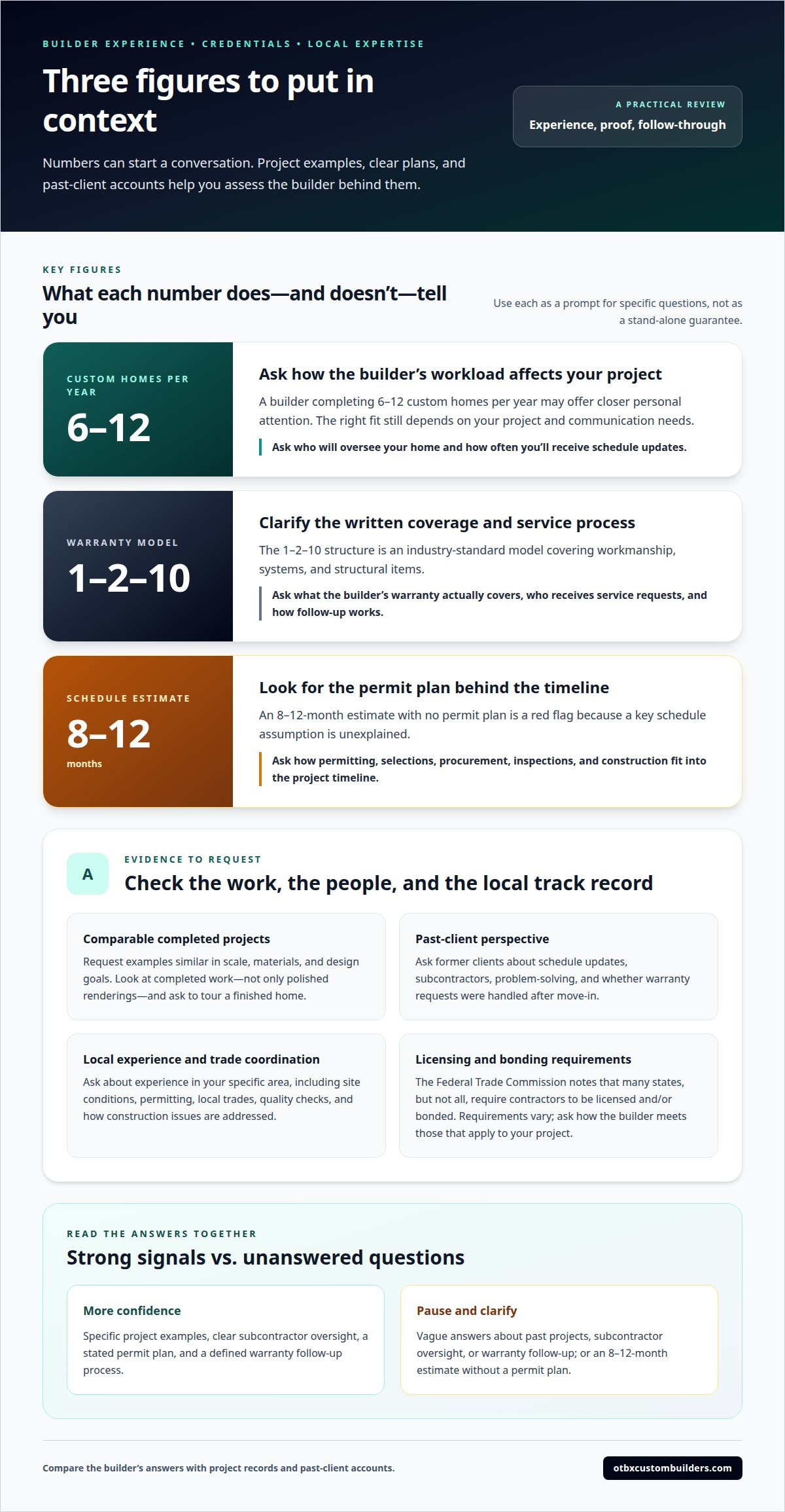
Ask how many years the builder has worked in your specific area, not only in construction generally. Local experience can shape decisions about site conditions, permitting, and coordination with local trades. Request examples of completed projects with similar scale, materials, and design goals. A builder completing 6-12 custom homes per year may offer closer personal attention, while the right fit depends on your project and communication needs.
Look at completed work, not just polished renderings. Ask to tour a finished home or speak with past clients about schedule updates, subcontractors, and how problems were handled. If you want a coastal contemporary home, for example, discuss a project with comparable forms and materials. Compare the builder’s answers with former clients’ accounts, including how warranty requests were handled after move-in.
Ask which trade partners typically work on projects and how the builder coordinates their work. Clear responsibility matters when several subcontractors contribute to one custom home. Also ask how the builder manages quality checks and addresses a construction issue before it affects later work. According to the Federal Trade Commission, many states, but not all, require contractors to be licensed and/or bonded. Requirements vary, so ask how the builder meets the rules that apply to the project.
What warranties and post-construction support should a luxury home builder provide? Clarify what the written warranty covers, who receives service requests, and how follow-up works; the 1-2-10 structure is an industry-standard model covering workmanship, systems, and structural items. Ask whether past clients experienced problems getting warranty items addressed.
What are common risks and red flags when hiring a luxury home builder? Vague answers about past projects, subcontractor oversight, or warranty follow-up deserve attention. An 8-12-month estimate with no permit plan is also a red flag because it leaves a key schedule assumption unexplained. For a custom-home project, design and construction planning can help connect scope, site needs, and practical decisions early.
Before construction, align the drawings, specifications, budget assumptions, and schedule. Design, engineering, permitting, and selections all need coordination before the foundation is poured. Ask what happens during preconstruction, who coordinates each decision, and how revisions affect construction documents. A clear plan turns preferences into buildable details, such as room layouts, structural requirements, and selected materials.
How do I compare design-build firms with architect-and-builder teams? Compare who coordinates the design, provides cost feedback, and transfers responsibilities into construction. With design-build, clarify how the builder works with the design team. When the architect and builder are separate, identify who resolves conflicts between drawings, specifications, and site conditions.
Ask how construction specifications describe materials, installation, and workmanship. For example, a window schedule should identify the intended product and opening details, while finish schedules should record selected surfaces and fixtures. Also ask how the builder selects and manages subcontractors, checks their work, and resolves mismatches between drawings and site conditions. The answers show how design intent becomes consistent craftsmanship.
Request a project timeline with milestones for permitting, selections, procurement, inspections, and construction. Ask how often updates arrive, where decisions are recorded, and how soon potential delays are reported. The schedule should make approval dates and owner decisions visible, since late selections can affect ordering and trade coordination.
Discuss material availability and procedures for delays before work starts. Ask which items could affect the critical path, such as windows, cabinetry, stone, or appliances, and when procurement decisions are needed. Clarify how a delayed shipment changes sequencing, who communicates revised dates, and how updates distinguish supplier delays from owner decisions or site conditions. A documented process gives everyone a shared basis for adjusting the timeline and recording changes.
Licensing and insurance are practical safeguards, not paperwork to leave until signing. The Federal Trade Commission says many states, but not all, require contractors to be licensed and/or bonded. Ask which requirements apply to the project location, what business name holds the license, and how to verify the builder’s status through the relevant state authority. Match that name with the contract so the responsible business is clear.
How do I verify a luxury home builder’s license, insurance, references, and past projects? Request current license information and evidence of liability insurance for the project, plus workers’ compensation insurance for employees. Then ask for references from former clients and examples of completed homes, and arrange a project visit or conversation where possible.
Review who and what the insurance covers. Ask whether the liability coverage applies to the construction project and whether workers’ compensation covers the builder’s employees. Also clarify how subcontractors are managed and what documentation applies to their work. The answers should make responsibilities clear, including who handles an incident or claim.
Use references to assess the builder’s process, not just the finished appearance. Ask a former client how the builder communicated, handled construction problems, and followed up on warranty items. When viewing a completed custom home, look for details that reflect your design and finish expectations. Ask which parts of the work the builder managed and which involved trade partners.
Keep a simple record before signing: business name, license details, insurance evidence, references, and project examples. Compare the names and responsibilities across those records and the proposed agreement. Clear documentation helps you understand who is accountable throughout construction. If you’re planning a custom home, discuss your home project with a builder who can address these questions directly.
OTBX Custom Builders offers new home construction for homeowners planning a custom home and ready to turn design decisions into a buildable plan. Its work includes custom and stick-built homes, giving you an opportunity to discuss your goals, site, and preferred construction approach together.
Turn to OTBX Custom Builders when you’re ready to move from comparing builders to shaping a project scope. Bring your priorities for layout, finishes, and schedule, along with questions about budget assumptions, approvals, and communication. Clear conversations at the outset help both sides understand the decisions that will guide planning and construction.
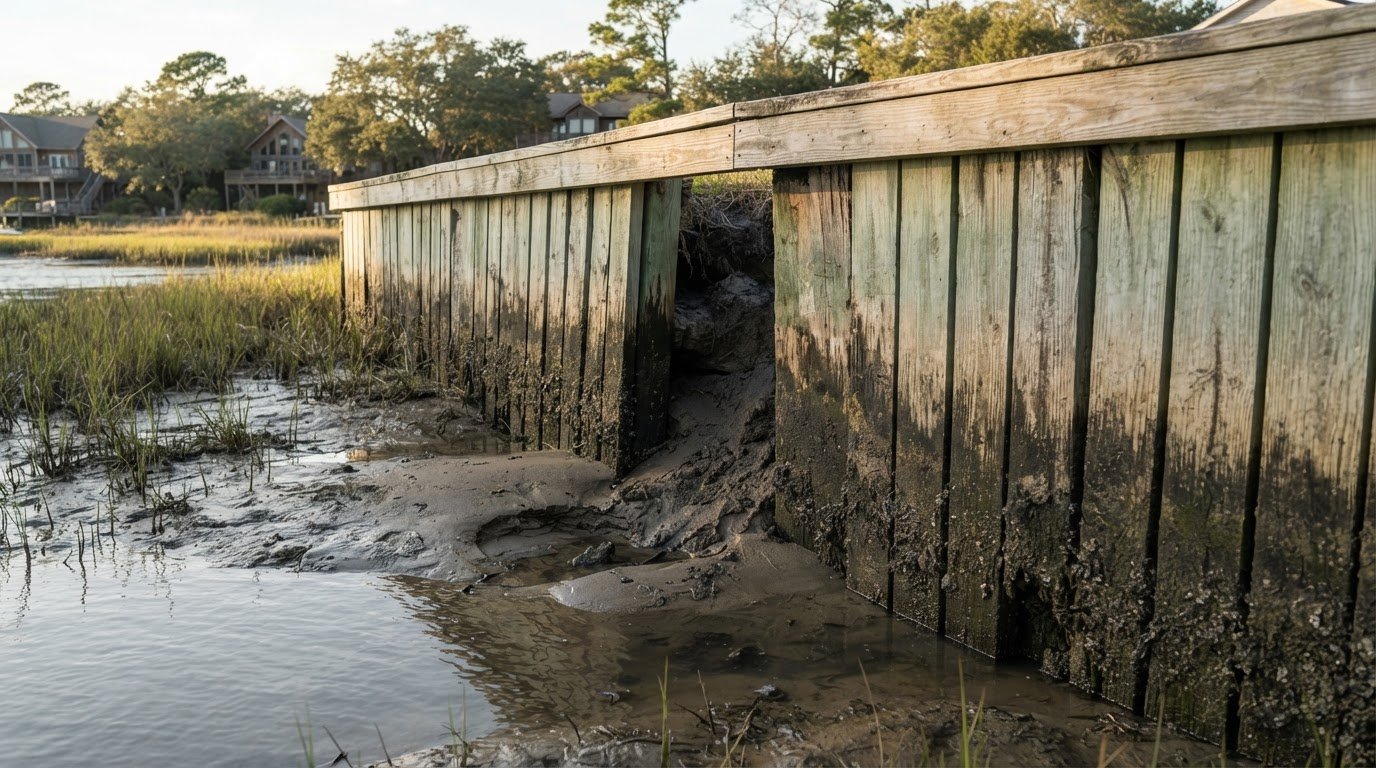
If your project also involves a dock, Dock Construction & Repair may be relevant to your property’s overall plans. Contact OTBX Custom Builders to discuss your new home project and the details you want to address.
Before moving forward, decide what a successful home needs to do for you. Write down the spaces and daily routines that matter most, along with features you’re willing to adjust. This gives your next conversation a practical starting point and helps keep design choices tied to how you’ll live in the home.
Use your questions to ask a luxury home builder as a working agenda, not just a checklist for an initial meeting. Note which decisions need your input, who should be part of each discussion, and what you want clearly documented before work begins. That preparation helps turn broad preferences into shared priorities and gives you a more active role in shaping the project.
When you’re ready to discuss your plans, contact OTBX Custom Builders. Bring your ideas, your priorities, and the questions you still need answered. A direct conversation is a constructive next step toward a home planned around your needs.
Provide timely decisions, consolidated feedback, and access to the people authorized to approve selections. Agree on a decision log that names each open item, the responsible person, its due date, and the effect of a delay. For example, combine household feedback on a flooring sample before approval rather than sending conflicting notes. Ask for upcoming decisions to be flagged during regular updates so you can prepare.
A procurement plan should connect each approved specification to its ordering point and delivery status. For example, track window dimensions, cabinetry details, stone selections, and appliance requirements against the drawings before placing orders. Clarify who approves substitutions if a product becomes unavailable and how a replacement is assessed for fit, appearance, and compatibility with surrounding work.
A useful schedule shows the sequence of design approvals, permit review, HOA or ARC review, ordering, inspections, and site work. Ask which approvals are required before construction can proceed and what information each review needs. Check that the timeline identifies owner decisions and expected review durations, then ask how revisions will be recorded if an approval or inspection changes the planned sequence.
The builder should record the issue, its location, supporting photos or field notes, and the work affected. For example, document an unexpected condition discovered during excavation before the team selects a response. Ask for options that explain differences in scope, materials, and schedule, then make the decision through the project’s written approval process so everyone understands the direction.
Quality control should include planned inspections during construction, not just a review at completion. Ask which work is checked before it is covered, such as framing, waterproofing, or mechanical rough-ins. For visible finishes, a sample or mockup can clarify how materials, grout, paint, or trim will look together. Record approvals so installed work can be compared with the agreed example.
A builder should explain how trade partners are chosen, briefed, scheduled, and reviewed. Ask who communicates drawings and specifications to each trade and who resolves conflicts between overlapping scopes. For example, cabinetry, electrical, and plumbing work may need coordination around the same kitchen layout. Clarify how workmanship concerns are documented and corrected before later work conceals or complicates the area.