

An allowance is a defined amount in a construction contract for a specific item that hasn’t been fully selected. Under AIA A201, listed allowances…
An allowance is a defined amount in a construction contract for a specific item that hasn’t been fully selected. Under AIA A201, listed allowances are included in the contract sum and cover materials or equipment delivered to the site, including taxes and excluding trade discounts. Clear construction contract allowances explained up front show what that amount covers, what it leaves out, and how a difference in actual cost affects the contract.
It’s reasonable to expect an allowance to make a construction budget easier to understand. But the amount alone doesn’t tell the whole story: contracts may treat installation, labor, overhead, profit, and selection deadlines differently. This guide to construction contract allowances explained covers common allowance items, how they differ from contingencies, and how to document the assumptions so everyone understands what the contract includes and what happens when a selection costs more or less than expected.
Under AIA A201, an allowance listed in the contract documents is included in the contract sum. Its written scope determines what the amount covers and how actual costs affect the price.
A construction allowance is a budgeted amount for a specified item that hasn’t been selected or fully priced when the contract is prepared. Builders use allowances when plans leave choices open, such as flooring material or fixtures. Under AIA A201, an allowance covers materials or equipment delivered to the site, including taxes and excluding trade discounts. Labor, installation, overhead, and profit are included elsewhere in the contract sum. A contingency is different: it reserves funds for uncertain costs or unexpected events, rather than a named selection.
A fixed-price item has an agreed scope and price in the signed contract; an allowance sets a budget for an item whose final selection or cost remains open. That distinction affects how the contract sum changes. Under AIA A201, if actual allowance costs are higher or lower, the contract sum is adjusted by change order. A fixed-price item doesn’t automatically fluctuate with the owner’s later choice unless the parties change the scope. State and local requirements depend on the jurisdiction governing the contract, so the agreement should clearly define each allowance and how differences are handled.
A low allowance can make the initial contract sum look smaller, while leaving the owner responsible for a larger difference after choosing materials. For example, a flooring allowance may cover materials but not installation, labor, or other costs included elsewhere. Vague wording can also lead to disagreements about taxes, delivery, or which products qualify. The contract should name each item, define what is included and excluded, and explain how overages and credits are documented.
Allowances often cover finishes and fixtures that have not been selected when plans are prepared. Common examples include flooring, tile, cabinetry, countertops, lighting, plumbing fixtures, and appliances.
The owner generally selects allowance items and vendors, while the contractor may object to a vendor for reasonable cause, according to AIA A201. This role matters because the chosen product affects actual cost, delivery, and sometimes installation requirements. For example, selecting a specific flooring product helps clarify what the allowance covers and whether its installation needs differ from the planned work.
The contract should also state who places orders and arranges related subcontracting. Clarifying responsibility alongside the selection process helps prevent disputes about who orders a vanity or coordinates delivery. A selection schedule can link choices, such as tile and plumbing fixtures, to the construction timeline.
An allowance reserves funds for an item that the plans have not specified, such as a kitchen countertop finish or bathroom vanity. It gives the contract a defined budget while leaving the final selection open.
List each undecided item separately instead of grouping unrelated finishes under a broad label. “Kitchen finishes” leaves it unclear whether cabinetry, countertops, or hardware are included. Naming the item, quantity or scope, and who is responsible for selecting it gives both parties a clearer basis for comparing the allowance with actual purchases.
What an allowance includes depends on whether it covers materials alone or an installed item. Under AIA A201, materials or equipment delivered to the site include applicable taxes and exclude trade discounts. Labor, installation, overhead, and profit sit elsewhere in the contract sum unless the contract defines a different arrangement.
A material-only flooring allowance, for example, covers the flooring material and applicable sales tax, but not installation labor, overhead, or profit. An installed allowance includes the material, installation labor, and applicable sales tax, but excludes overhead and profit unless the contract says otherwise. Spell out these boundaries for each allowance so the client can see what the amount covers and how additional charges are handled.
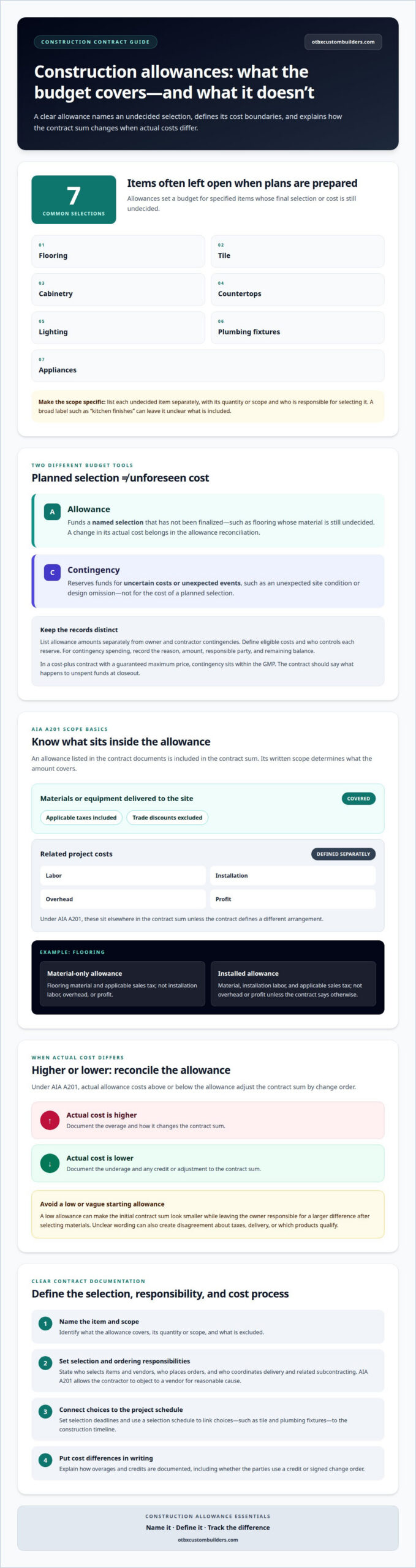
An allowance reserves contract funds for a defined selection, such as flooring whose final material remains undecided. A contingency instead covers uncertain project costs, such as an unexpected site condition or design omission. The distinction matters: a change in the material’s actual cost belongs in the allowance reconciliation, while an unforeseen condition may draw on contingency funds. Keep the two separate and state the purpose of each amount.
In a cost-plus contract with a guaranteed maximum price, the contingency sits within the GMP. At project closeout, unspent contingency funds typically revert to the owner or are shared, depending on the contract. The agreement should specify who controls each reserve and which risks it covers. For example, an owner’s contingency may cover owner-directed scope changes, while a contractor’s contingency may address unexpected costs within the contractor’s scope.
Documentation makes those boundaries usable. List each allowance amount separately from owner and contractor contingencies, and define eligible costs for each. State how an allowance overage or underage affects the contract sum, including whether the parties use a credit or signed change order. For contingency spending, record the reason, amount, responsible party, and remaining balance. A running tally helps owners compare spending with the approved budget.
Review the figures as the project progresses. At regular project meetings, owners and contractors can compare selections, supplier quotes, material costs, and known project risks against the allowances and contingencies. If a flooring selection changes, compare its actual cost with the allowance and document the difference. If site conditions require unexpected work, record the contingency draw separately. This keeps one reserve from quietly covering another purpose and creates a clear record for closeout.
An estimate should explain the purpose and limits of each allowance, not just list its amount. For flooring, state whether it covers materials only or also installation, tax, and related charges. For appliances, identify the included package or items and explain how the final selection will be compared with the allowance. Clear assumptions help the client understand what the contract sum represents before signing.
Base allowance amounts on current market pricing or supplier quotes, and explain the assumptions behind each estimate. A flooring allowance based on one material grade may not cover a different finish or installation method. If the client prefers higher-grade appliances, show how that selection affects the actual cost. When comparing proposals, use the same allowance amounts; otherwise, different budgets can make estimates appear more comparable than they are.
Homeowners should ask, “What does each allowance include, what is excluded, and how will overages or credits be documented?” They should also clarify who approves additional spending and when selections are due. Put the answers in the contract: require client approval before spending additional money on allowance-related materials or labor, and use a written change order for cost adjustments. A selection schedule sets clear deadlines and helps coordinate choices with the construction timeline.
State assumptions in plain language, then review them with the client before the contract is signed. For a home where layout decisions shape finish selections, explore floor planning design services as part of planning those choices.
OTBX Custom Builders, LLC helps homeowners plan new home construction, including custom and stick-built homes. Raise allowance questions during planning when choices such as flooring, fixtures, or appliances are still open. Clear descriptions of scope and selection assumptions help connect the estimate to the home you intend to build.
For a custom home, floor plans and finish choices help determine which items need allowances and which can be specified before the contract. OTBX Custom Builders, LLC can help you consider these choices as you plan your new home. Contact OTBX Custom Builders, LLC to discuss your project, or visit otbxcustombuilders.com.
Having construction contract allowances explained in plain language helps the whole project team make decisions from a shared understanding. Before work begins, consider how your priorities, selections, and project sequence fit together. A well-organized decision record can keep expectations aligned as plans move from paper to construction.
Use your next planning conversation to identify which choices matter most to you and how they connect to the home you want to build. OTBX Custom Builders, LLC offers new home construction, custom homes, and stick-built homes. Discussing your project with the builder can turn your priorities into a clear starting point.
Contact OTBX Custom Builders, LLC today to discuss your plans. A thoughtful start can make the decisions ahead easier to manage.
Contractors can manage allowances with an up-to-date record of selections, commitments, and remaining balances for each item. For example, a shared schedule can track the chosen faucet, supplier quote, order status, and difference from its allowance. Review the record with the client before purchases or substitutions to allow time to discuss any effects on scope or budget.
After a selection is made, compare its documented purchase costs with the contract allowance and apply the adjustment method stated in the contract. For flooring, for example, reconcile the amount using the supplier invoice and any specified related charges. Record whether the difference increases the contract sum or creates a credit, then document the agreed adjustment in writing. This creates a traceable record for payment and closeout.
Use an allowance for an identifiable choice, such as an appliance package the owner has not selected. Use a contingency for uncertain project risks, such as concealed site conditions or an unforeseen design omission. Ask what specific item or risk the funds are intended to cover. If the answer describes a planned selection, it points to an allowance; if it describes uncertainty, it points to a contingency.
Before signing, have construction contract allowances explained item by item, including the scope, inclusions, and exclusions for each. A clear clause also states who selects the item, who places the order, what approval is required before spending above the allowance, and how overages or credits will be recorded. For example, an appliance clause can define the package, related charges, approval process, and written adjustment method.
A construction allowance is a budget provision for an identified item whose final selection or cost remains open when the contract is prepared. It accounts for a planned choice without treating the item as fully specified. For instance, a contract may reserve an allowance for kitchen lighting while the owner considers fixtures. The contract wording determines how the selection is handled financially.
When construction contract allowances are explained clearly in the agreement, the owner can see how actual costs affect the amount owed. If a selected fixture costs more, the contract may require an approved increase; if it costs less, it may provide a credit or another agreed adjustment. Keep invoices, selection records, and written approvals together so each adjustment is tied to the selected item.