The most visible damage isn’t always the most serious. A cracked cap may be limited to the surface, while gaps, leaning sections, or soil washing out…
The most visible damage isn’t always the most serious. A cracked cap may be limited to the surface, while gaps, leaning sections, or soil washing out behind the wall can signal a deeper problem. If you’re considering seawall repair, start by documenting what has changed and looking at the wall in the context of the shoreline around it.
Water movement, drainage, and erosion can affect a wall, but visible damage alone doesn’t show whether a targeted repair will work or broader rebuilding is needed. That depends on the damage pattern, the condition of nearby sections, and site factors such as access and adjacent structures. Choosing a repair method before understanding those factors can leave the cause unaddressed.
This guide explains which signs warrant closer assessment, how site conditions shape repair options, and what information can help you plan. It also covers why nearby waterfront structures may affect the work. OTBX Custom Builders, LLC provides seawall and bulkhead construction and repair as part of its marine construction work.
Visible movement or shoreline erosion can be concerning, but neither one tells you how much repair a seawall needs. A shifted cap might be limited to one area, while soil loss behind the wall may point to a problem that isn’t visible from the water-facing side. For seawall repair North Carolina coast property owners should document changes and assess the wall in the context of its site, rather than choosing a repair based on one symptom.
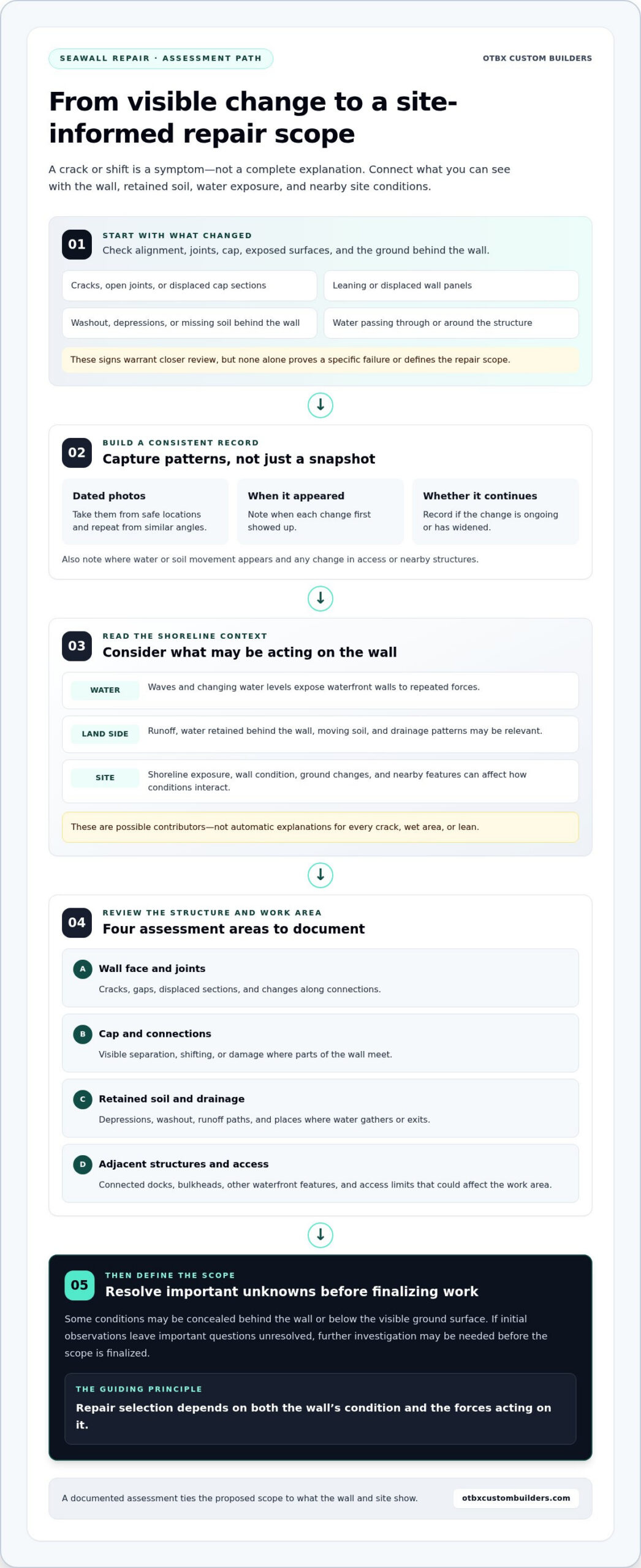
Check the wall’s alignment, joints, cap, and exposed surfaces. Cracks, displaced panels, leaning, gaps, or soil washing out behind the wall are all reasons for closer review. These signs are useful to document, but they don’t prove a specific type of failure or establish the repair scope.
Gaps and missing soil deserve attention because changes behind the wall may not be apparent from the water-facing side. Take dated photos from safe locations and repeat them from similar angles. Note when each change appeared and whether it is continuing. A consistent record can make it easier to identify a pattern than relying on memory or a single photograph.
Waves and changing water levels expose waterfront walls to repeated forces. Runoff can bring water from the land side, while moving soil or poor drainage may affect conditions behind the structure. How these factors interact depends on the shoreline, the wall, and nearby features. A crack or wet area on its own doesn’t identify the cause.
Routine exposure to waves, tides, and rain doesn’t automatically mean structural failure. A small visible change may still deserve attention if it recurs or appears alongside soil loss. After significant weather, note what has changed around the wall, but don’t assume the storm explains every sign. For broader context on storm recovery in North Carolina, see this overview of hurricane recovery.
A seawall assessment reviews the wall, retained soil, water exposure, and nearby conditions to understand what visible changes may mean for the site. It connects observations, such as leaning or washout, with the conditions around them and helps identify what information is needed to define an appropriate scope. OTBX Custom Builders provides seawall and bulkhead repair, with decisions informed by the existing wall and shoreline setting.
A crack or shift is a visible symptom, not a complete explanation. Water and soil can exert pressure on a retaining wall, while drainage, shoreline exposure, and changes in the ground may affect how that pressure acts on the structure. These factors can interact, but appearance alone doesn’t establish a cause. For seawall repair North Carolina coast projects, an assessment connects what is visible with the conditions surrounding the wall.
Water levels and wave action may expose a wall to changing forces. Water retained behind it, soil movement, and runoff collecting near the structure may also be relevant. An assessment considers where water flows and whether drainage patterns could be contributing to the condition. These are possible contributors, not automatic explanations for every crack or lean.
The wall’s material condition, construction details, and shoreline exposure also matter. A surface crack may call for a different response than movement accompanied by soil loss, but appearance alone can’t settle that question. Repair selection depends on both the wall’s condition and the forces acting on it.
A useful review describes the structure and its setting, not just a list of defects. It records the location and extent of visible damage, the wall’s alignment, and conditions in the ground behind it. It also notes waterfront access and nearby features that could affect the work.
The review may include the following areas:
Some conditions may be concealed behind the wall or below the visible ground surface. If the initial observations leave important questions unresolved, further investigation may be needed before the scope is finalized. Defining the work too early can overlook the condition driving the damage. A documented assessment helps tie the proposed scope to what the site shows.
To prepare for seawall repair planning, gather dated photos, note where water or soil movement has appeared, and describe changes in access or nearby structures. OTBX Custom Builders provides seawall and bulkhead repair as part of its marine construction work. Talk with OTBX about seawall repair and share the observed conditions and site context.
The right scope depends on what an assessment finds, not on a blanket preference for repair or replacement. A localized defect may leave the surrounding wall in suitable condition, while repeated movement or deterioration across multiple sections can raise broader questions. For seawall repair North Carolina coast projects, compare the damage, condition of the remaining wall, likely cause, access, and site constraints before choosing an approach.
Targeted repair may fit when an assessment identifies a limited problem and finds the surrounding wall and retained ground suitable for that scope. Consider whether the issue is isolated or linked to nearby movement, water flow, or soil loss. A localized fix can address a defined area, but it isn’t a guarantee that damage won’t recur.
| Option | When it may fit | Factors to weigh |
|---|---|---|
| Targeted repair | Damage appears limited and the nearby wall remains in serviceable condition. | Whether the cause is understood, whether adjacent sections are stable, and whether the repair area is accessible. |
| Partial rebuilding | One or more sections need more substantial work, while other portions may be retained. | How rebuilding connects to existing sections, the condition of the retained wall, and site access for construction. |
| Full replacement | Damage is extensive, failure has recurred, or the existing structure’s condition warrants evaluating a broader scope. | Shoreline constraints, nearby structures, access, and the needs of the site as a whole. |
These are comparison points, not automatic thresholds. A problem that looks small from one side may involve conditions behind the wall, while an isolated damaged area may not justify rebuilding sound sections. For more construction-focused context on shoreline solutions, read this seawall construction guide.
Extensive damage or repeated failure makes it reasonable to compare a wider construction scope. Consider whether sound sections can remain while damaged areas are rebuilt, or whether the condition and cause point toward replacing more of the structure. Access, nearby docks or bulkheads, and shoreline constraints can all affect planning. Related waterfront considerations appear in this marine construction project guide.
Material selection belongs in the same site-specific discussion. The existing wall, shoreline exposure, construction details, and practical limits of the work area all inform which materials and scope are appropriate. No material is right for every property. OTBX Custom Builders provides seawall and bulkhead construction and repair, with project decisions grounded in the structure’s condition and site requirements.
A clear sequence helps keep seawall repair planning organized. Before construction is scheduled, assemble site information, consider access and nearby structures, define a scope based on observed conditions, and address applicable approvals. For seawall repair North Carolina coast projects, the shoreline setting and current requirements matter, so resolve site-specific questions during planning.
Gather dated photos, notes about when changes appeared, records of previous repairs, and any site plans you have. Mark areas with limited access and note nearby docks, boat lifts, utilities, shared spaces, or other structures that could affect the work area. This information gives the assessment a practical starting point and helps identify questions to resolve. It doesn’t establish a fixed repair scope.
Logistics can shape how a project is organized. A narrow shoreline route, limited staging space, changing water conditions, or the need to move materials near existing structures may affect access and handling plans. If a dock or other waterfront feature also shows damage, a dock repair damage checklist can help you organize observations about that structure. Note shared access arrangements early so they can be considered during planning.
Some coastal projects may involve review under the Coastal Area Management Act (CAMA), depending on location, work scope, and current requirements. The North Carolina Division of Coastal Management is a relevant authority for coastal development guidance. Requirements can differ by site and project, so don’t assume that one repair’s approval process applies to another. Review current guidance and applicable approvals for the specific work before scheduling construction.
Use an ordered planning sequence:
This sequence separates what is known from what still needs resolution. Photos and records describe observed conditions; an assessment informs the construction scope; approval requirements influence when work can be scheduled. OTBX Custom Builders provides seawall and bulkhead repair as part of its marine construction work. Discuss your seawall repair project with OTBX and organize the observed conditions, access details, and next planning steps.
A useful next step is to bring observations together with the site context. OTBX Custom Builders provides seawall and bulkhead construction and repair as part of its marine construction work. The repair approach, materials, and project details depend on the existing wall, shoreline conditions, access, and the scope supported by the site assessment. A clear discussion helps organize what’s known and what needs closer review.
Share the property setting, the changes you’ve observed, dated photographs, and any information about previous work. Note access limitations and identify structures close to the seawall. These details help frame the discussion and questions to examine, but photographs alone can’t confirm concealed conditions or establish a final repair scope.
Even a brief set of notes can make the initial discussion more precise. For example, distinguish a change noticed after a storm from one that appeared gradually, and note whether water or soil movement is visible nearby. These observations provide context, not a diagnosis. The site and wall condition guide the assessment.
Seawalls don’t always sit apart from the rest of a waterfront property. A dock, boat lift, or bulkhead may affect access, the work area, or how construction is coordinated. OTBX’s marine construction work includes seawall and bulkhead construction and repair, along with docks and boat lifts. Those related structures matter to planning when they connect to the seawall work or affect access.
For seawall repair North Carolina coast properties, shoreline conditions and site constraints help shape practical decisions. A discussion can connect reported symptoms with the property setting, access, nearby structures, and the scope that needs assessment. It can also clarify which details are known and which require a closer look before repair methods or materials are considered.
Bring your observations and site context to a discussion about a seawall repair project with OTBX Custom Builders. A site-specific conversation helps organize the next questions without assuming that a photograph alone settles the repair scope.
You don’t need to choose a repair method before discussing the seawall. Use the next step to clarify what needs closer assessment, which decisions can wait, and what information will help define a workable scope. This keeps planning grounded in the property’s conditions rather than pushing you to choose between repair and replacement too soon.
For seawall repair North Carolina coast properties, a useful discussion can organize questions about the wall, shoreline, access, and adjacent structures. OTBX Custom Builders brings marine construction experience to seawall and bulkhead projects, with docks and boat lifts considered where they affect the work area. Project details depend on the waterfront site, so the goal is a clear, informed path forward rather than a one-size-fits-all answer.
Share what you’ve observed and discuss the site context with OTBX. Discuss your seawall repair project with OTBX Custom Builders to move forward with a clearer understanding of what to assess.
Yes, a seawall can sometimes be repaired without replacing the full structure. The right scope depends on what caused the damage and whether nearby sections remain sound. A defect limited to one area may support targeted work, while repeated movement or deterioration across several sections may call for broader rebuilding. For seawall repair North Carolina coast properties, an assessment helps distinguish a limited repair opportunity from conditions that warrant a wider project.
There isn’t one reliable price that applies to every seawall repair. The wall’s condition, repair scope, materials, access, and site requirements all affect the work involved. A hard-to-reach section or complications around existing waterfront features may change the project plan. Assessment findings help define what the project includes. Once the scope and site conditions are understood, a project-specific cost discussion is more useful than a general estimate.
Repair duration depends on the project, so a standard number of days or weeks could mislead. A limited repair with straightforward access may involve different work and coordination than rebuilding multiple sections beside a dock or other obstruction. Materials, water conditions, and required reviews can also affect scheduling. Discuss timing after the site and scope have been assessed, and clarify which approvals or coordination steps need to happen before construction starts.
Not every repair follows the same approval process. CAMA or other reviews may apply based on the location, proposed work, and current requirements. Review the project’s circumstances against current North Carolina Division of Coastal Management guidance before work begins. A change from minor repair to more extensive rebuilding may affect what needs review, so describe the intended scope accurately when determining applicable approvals.
It can, depending on the boundary, shoreline layout, access route, and scope of work, but effects aren’t inevitable. During planning, identify shared access areas, adjoining structures, drainage paths, and boundary markers near the proposed work. For example, equipment access along a narrow shared edge may require coordination before scheduling. Documenting these conditions helps make neighboring site considerations visible during project planning.
Coverage depends on your policy, the circumstances that caused the damage, and the insurer’s terms. Don’t assume seawall repair is automatically covered or excluded. Review the relevant policy language and discuss the specific loss directly with your insurer, especially if damage followed a storm or another documented event. Keep insurance questions separate from the construction assessment: the assessment addresses the wall and repair scope, while the insurer determines coverage under the policy.