
What if the lift that seems right for your boat doesn’t suit your waterfront? A successful boat lift installation project starts with more than…
What if the lift that seems right for your boat doesn’t suit your waterfront? A successful boat lift installation project starts with more than vessel capacity. Boat dimensions and loaded weight matter, but so do water depth, bottom conditions, dock layout, and the structure supporting the lift.
Choosing a lift that fits your boat is only the first step. The setup also needs to work with the dock and shoreline, allow practical access for the vessel, and account for any related marine construction. Reviewing these details early helps define the project scope and installation sequence.
This guide explains how to match a lift configuration to your vessel and assess the waterfront conditions that shape installation. It also covers site preparation, project coordination, and approval considerations, which can vary by location and scope. OTBX Custom Builders, LLC approaches boat lifts as site-specific marine construction projects and coordinates dock or seawall work when it belongs in the same plan.
A suitable lift has to fit both the boat it will support and the waterfront where it will operate. For boat lift installation NC, choosing equipment by vessel type alone can overlook practical constraints such as water depth, dock access, or changing water levels. A site-first assessment connects the boat’s needs to the structure and conditions around it.
Gather the boat’s specifications and consider how you use it. A vessel kept in the lift with fuel, gear, and accessories aboard presents a different working load from its documented dry weight. Hull shape and beam also affect how the boat can sit on its supports. The general distinction between boat lifts used for storage and those used to move boats between waterways is outlined in Boat lift (Wikipedia).
Collect details about the vessel and its usual storage routine. Manufacturer documentation provides a starting point, while a project assessment helps translate those details into a suitable configuration and final sizing.
Use these specifications as design inputs, not as a substitute for final sizing. The assessment should reconcile the documented figures with the boat’s actual configuration and intended use.
The site can shape lift placement and the work required. Water depth and bottom conditions affect what can be supported in the water. Exposure and expected water-level variation also influence how the setup needs to function as conditions change. Consider these factors together rather than treating them as separate details.
Dock layout and access matter, too. Existing framing, available space beside or beneath the dock, and the route for moving equipment can affect where installation work can take place. If a dock, seawall, or bulkhead needs attention, that work may belong in the overall waterfront scope.
Assess vessel specifications and site conditions together. The right lift is one that fits the boat and the waterfront where it will operate. A nearby property can offer a point of comparison, but differences in boat dimensions, dock layout, water depth, bottom conditions, and exposure can change the plan. A site-specific assessment gives the project a sound basis before the lift configuration is finalized. OTBX Custom Builders, LLC installs custom boat lifts as site-specific marine construction projects.
A boat lift raises a vessel clear of the water for storage. Its components work as a system: the structure carries the load, the cradle or bunks support the hull, and the lifting mechanism moves the vessel while the controls operate the system.
That relationship matters during boat lift installation NC. The supporting structure, hull-contact points, and controls all need to suit the vessel and site for the lift to operate as intended. The Boat-Lift Design and Analysis (Western Michigan University) paper examines structural design considerations, stress analysis, and safety factors, illustrating why a lift should be planned as an integrated system rather than a collection of separate parts.
The exact arrangement depends on the selected design. A frame, supported by pilings or other structural elements as appropriate, provides the main framework. A cradle or set of bunks contacts the vessel’s hull and helps support it as the lift raises and holds the boat. The supports need to be positioned for the hull, not simply placed wherever space is available.
The lifting mechanism moves the supported vessel, while controls let the operator raise or lower it. Designs differ, so consider the operating method and control arrangement alongside the structure and hull supports.
Water and weather exposure can affect lift components over time. Material choices should reflect site conditions and the maintenance they may require. No material is right for every setting: exposure, construction details, and care all matter. Include inspection and upkeep in the plan, not just the initial installation.
Control options and power needs depend on the selected system. Their placement and operation should work with the dock layout and the way the vessel will be handled. Final specifications are shaped by the boat, the site, and the installation design.
Coordinate these parts rather than selecting them in isolation. Changing the support arrangement can affect how the hull sits, while the dock structure and site exposure can influence the broader installation design. OTBX Custom Builders, LLC installs and services custom boat lifts, with related waterfront construction considered where it fits the project. Explore OTBX boat lift installation and service as part of planning a site-specific setup.
Configuration describes how a lift is arranged at the waterfront. It is not the same as capacity: a suitable style still needs to be designed and sized for the vessel and installation site. For boat lift installation NC, compare how each arrangement fits the dock, water depth, expected water-level changes, and the way you plan to use and store the boat.
| Configuration | Vessel and waterfront fit | Water and operating considerations |
|---|---|---|
| Fixed, pile-supported arrangement | Can suit a site where a fixed support structure can be placed to align with the dock and boat access. | Water depth and bottom conditions inform whether the proposed structure can be installed as designed. Consider whether the operating position works through expected water-level changes. |
| Floating or modular arrangement | May be considered where a modular layout fits the available space and waterfront access. | Compatibility with the site’s water conditions and the selected lift must be assessed. Confirm how the arrangement works through the water-level variation expected at the property. |
This is a planning comparison, not a universal ranking. The useful question is whether a configuration can be integrated with the site and intended vessel. A site assessment determines whether the proposed arrangement is appropriate.
A fixed installation relies on a planned position and structural supports. Dock location, access from the water, and room around the vessel all influence placement. A floating or modular arrangement offers a different layout to evaluate, but it still needs to suit the selected lift and actual site conditions. The configuration name alone does not establish fit.
Consider the boat’s path in and out, working space at the dock, and any existing waterfront structures that could affect placement. A neighbor’s setup may look similar, but differences in access, bottom conditions, or water depth can change the installation plan.
Hull shape and vessel design affect how a boat can be supported. A broad hull and a narrower hull may need different support placement, while documented specifications help inform the final configuration and sizing. Don’t assume that a setup suited to one vessel category will fit another boat with different dimensions or hull form.
Use your vessel documentation as a comparison tool. Note the boat’s type, dimensions, working load, and how often it will be launched or stored. Frequent use can make straightforward access and consistent positioning priorities. Longer storage periods may put more emphasis on how the boat is supported at rest. The assessment connects those preferences with the waterfront layout and the selected system’s specifications.
Choose by fit, not by category name alone. Compare vessel support, dock position, water conditions, access, and operating preferences together, then base final sizing and engineering on the project design.
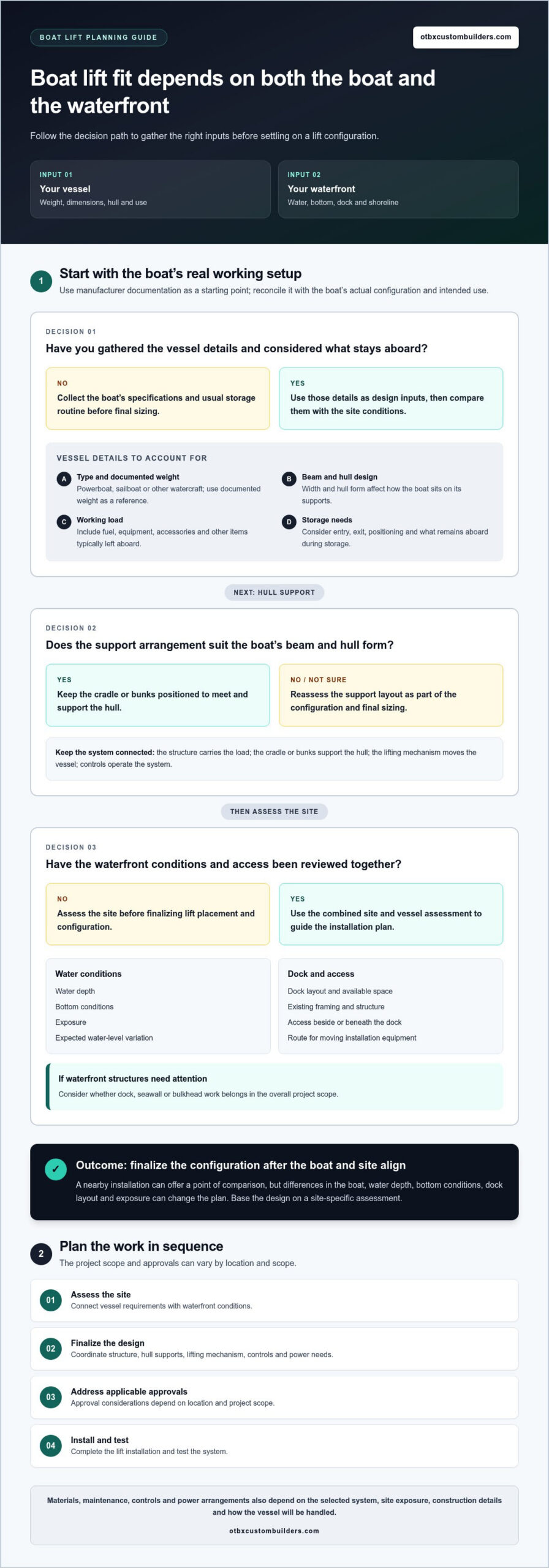
A clear work sequence turns a lift choice into an installation plan grounded in actual waterfront conditions. For boat lift installation NC, move from assessment to design, then address approvals before installation and functional checks. Keeping the stages distinct helps surface site constraints before they disrupt the work.
Bring the project information together in one record: vessel specifications, observed water conditions, existing waterfront structures, and access to the work area. Include practical constraints such as limited space around the dock or obstacles that could affect equipment movement. This shared record gives design and installation planning a consistent reference.
Document dock or shoreline repairs that could influence lift placement or sequencing. If those structures need attention, consider them alongside the lift scope so the plan accounts for how the work fits together. OTBX’s marine construction contractor guide offers broader context on coordinating waterfront construction.
Approval requirements differ among waterfront projects. They can depend on project details, location, waterway, and the authorities with jurisdiction. Don’t rely on assumptions from another property or a past project. Establish current requirements for the actual site and proposed scope before scheduling installation work.
Once the design and applicable approvals are addressed, installation can follow the agreed project sequence. Functional checks help assess how the installed lift operates within that design. The specific checks and methods depend on the system and site, so they should reflect the completed installation rather than a generic checklist.
OTBX Custom Builders, LLC coordinates boat lift installation and related dock or seawall work when it belongs in the waterfront scope. Plan your boat lift project with OTBX around the vessel, site conditions, and installation sequence.
A boat lift is part of a working waterfront, so a sound project plan considers more than the lift itself. OTBX Custom Builders installs and services custom boat lifts tailored to coastal watercraft and environmental conditions. The team can also consider dock, seawall, or bulkhead work alongside the lift when the existing structure or proposed location makes that coordination relevant.
This construction-led approach connects the vessel’s needs with the condition and layout of the waterfront. Lift placement may depend on the dock’s structure, available space, and boat access. If nearby components need work, accounting for that scope early helps clarify what the project includes and how each part relates.
The condition of an existing dock and the proposed lift location are closely linked. Placement may depend on the structure the lift connects to or sits beside, while dock work can influence access and installation sequence. For dock-specific planning, OTBX’s dock construction buyer’s guide covers considerations that can inform the broader waterfront scope.
Shoreline conditions matter when seawall or bulkhead work is relevant. Discussing those needs as part of the same project can help establish how the lift and shoreline work fit together, rather than treating each as an unrelated decision. The seawall construction guide offers context for shoreline planning.
Bring the practical information that can shape a site-specific scope. Useful items include the vessel’s documented specifications, how it is typically used and stored, observations about water and access, and the condition of nearby waterfront structures. Photos or notes about visible concerns can keep the discussion focused on the actual property.
The project conversation can then establish:
These details give OTBX a practical foundation for shaping a project-specific installation scope. They also help distinguish the core lift work from related waterfront construction, making it easier to see how each part fits.
For a practical conversation about your boat lift project, discuss a boat lift project with OTBX.
Turn your priorities into a project scope built around your waterfront. Gather your boat’s specifications, note how you use it, and record concerns about the dock or shoreline. This gives the planning conversation a practical starting point and keeps decisions tied to your actual site rather than assumptions.
For boat lift installation NC, OTBX provides lift installation and service as part of its marine construction work. When the waterfront scope calls for it, dock, seawall, and bulkhead construction or repair can also be considered alongside the lift. A clear plan reflects the vessel, site conditions, and related work without treating every property as the same project.
When you’re ready to take the next step, start planning your boat lift project with OTBX. A focused conversation can turn your site observations into a workable path forward, with decisions based on the conditions that matter at your waterfront.
Possibly, but the dock’s condition and structure need to be assessed for the proposed lift and its loads. Look for visible damage, loose connections, rot, corrosion, or movement, but don’t treat a visual check as a structural assessment. The lift may need its own support arrangement, or dock work may be relevant before installation. The decision depends on the dock design, lift location, and vessel, not simply the dock’s age.
Base capacity on the boat’s working load, not just the dry-weight figure in its documentation. Include fuel, equipment, accessories, and items typically left aboard, then have the final sizing assessed for the selected system. For example, a boat carrying substantial onboard gear needs to be evaluated in that loaded condition. Accurate boat lift installation NC planning connects the vessel’s specifications with the lift design.
It depends on the lift design and the range of water-level changes at the property. The system needs to be planned around boat access and the lift’s operating position through expected conditions. If levels vary seasonally, record observed high and low points and how they affect the dock and boat approach. Those observations help determine whether a proposed setup suits the site. Not every configuration fits every fluctuation pattern.
Approval requirements depend on the location, waterway, project scope, and authorities with jurisdiction. Before work begins, identify the current rules for the specific property and proposed installation, including whether related dock or shoreline work changes the scope. Don’t rely on a neighbor’s past approval as a substitute for establishing the project’s requirements. Keeping the site plan and proposed work details organized can support that review.
Yes, lift installation can be planned alongside dock work when the project scope and site conditions support coordination. For example, if the proposed lift occupies an area where dock repairs are also needed, deciding the work sequence early can reduce conflicts between the two scopes. The existing structure, access, and final lift location all matter. Coordinate the plans before work starts so related construction is considered as one waterfront project.
Follow the lift and vessel manufacturers’ instructions, along with current local weather and safety guidance, because storm preparation depends on the system and conditions. Before severe weather, secure loose items and follow the specified procedure for positioning or securing the boat and lift. Don’t assume one setup is safe for every system. After a storm, inspect for visible damage or shifted components and avoid operating equipment that appears compromised until it has been assessed.
Follow the system’s instructions and account for the lift’s exposure and use. Build a routine of checking visible structural connections, hull supports, moving parts, and controls for wear, corrosion, looseness, or unusual operation. Note changes between inspections. If the lift moves unevenly, makes an unfamiliar sound, or shows damage, stop using it and arrange a service assessment rather than assuming the issue will resolve on its own. If your lift needs attention, talk with OTBX about boat lift service.