A floating dock may need less vertical support, but it is not automatically the simpler foundation. Buoyancy carries most of its vertical load, while…
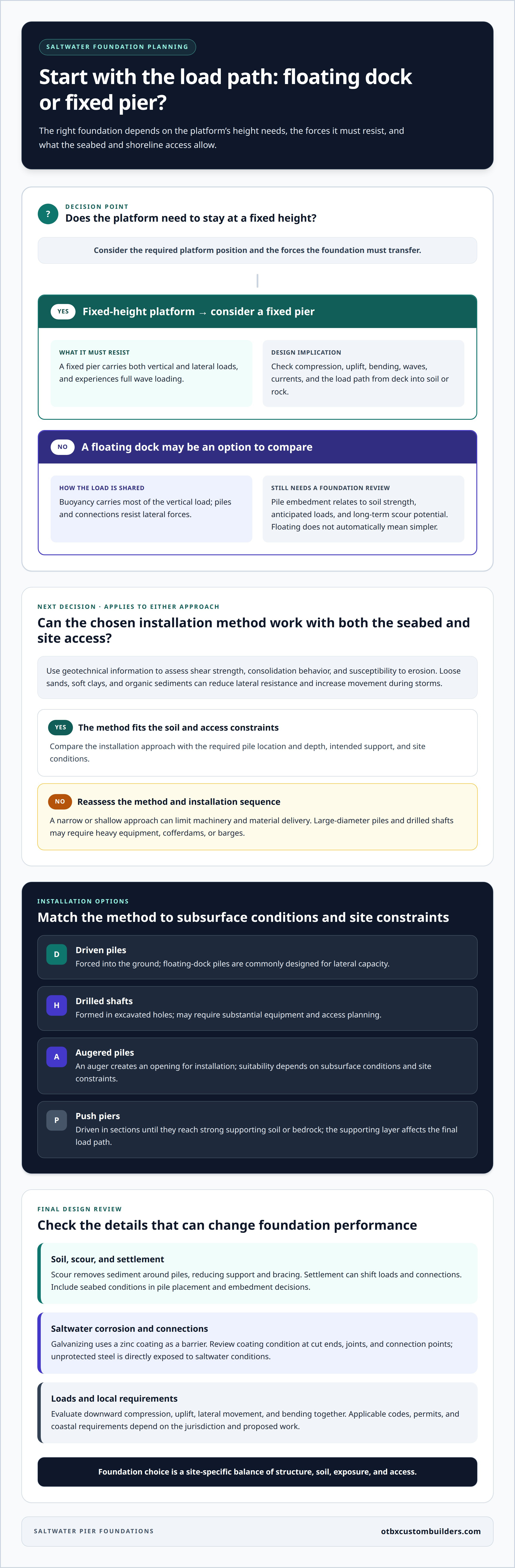
A floating dock may need less vertical support, but it is not automatically the simpler foundation. Buoyancy carries most of its vertical load, while piles and connections resist lateral forces. Fixed piers carry both vertical and lateral loads and experience full wave loading. A sound fixed pier foundation design for saltwater must account for corrosion, soil conditions, installation access, and the loads the structure will carry.
The distinction matters when you need a steady, fixed-height platform that can also withstand waves, currents, vessel impacts, and changing water conditions. Steel and pile selection affect durability and installation, while limited site access can shape how the foundation is built.
This guide compares fixed-pier and floating-dock foundations, explains how corrosion resistance, soil strength, and site access affect pile choices, and outlines the load considerations behind a reliable design. Use it to identify the key tradeoffs to discuss for your waterfront site.
Saltwater exposes steel piles, brackets, and connections to corrosion, making the protective system important throughout the foundation. Galvanizing coats steel with zinc, which acts as a barrier. If the coating is damaged, zinc can corrode before the underlying steel, but protection depends on exposure and coating condition. A design review should consider joints, cut ends, and connection points, where damage or gaps can expose steel.
Corrosion is not the only source of foundation trouble. Scour removes sediment around piles, reducing the soil that supports and braces them. Settlement can also shift loads and connections. Damage from corrosion, scour, or settlement may require complex marine construction repairs. For fixed pier foundation design for saltwater, consider pile materials and protective coatings alongside seabed conditions and the details connecting piles to the deck.
Soil conditions, tidal range, and coastal regulations all influence design. Soil strength and susceptibility to erosion affect pile placement, while changing water levels alter exposure and elevations. The U.S. Government Publishing Office notes that soil tests help evaluate pile placement and foundation needs. Applicable coastal requirements can also constrain a project’s location, dimensions, or materials, so account for them in the design.
| Option | Corrosion consideration | Design review |
|---|---|---|
| Galvanized steel | Zinc coating protects the steel surface | Review coating condition at cuts, joints, and connections |
| Unprotected steel | Steel is directly exposed to saltwater conditions | Assess corrosion exposure and maintenance implications |
Base the design on site exposure, soil and scour conditions, and connection details. A coating is one part of the plan, not a substitute for assessing the full foundation and its maintenance needs.
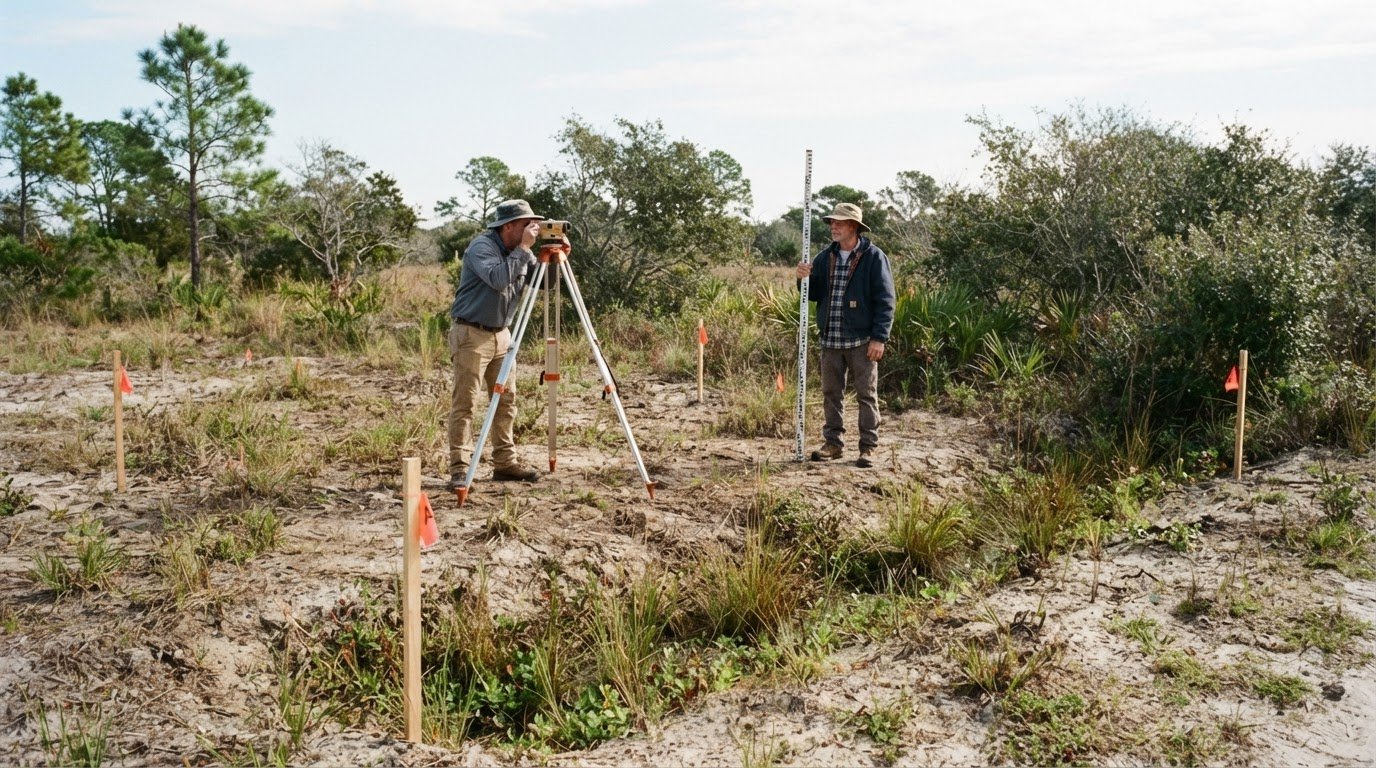
Installing a saltwater pier depends on the seabed and the equipment that can reach the work area. Soil conditions and shoreline access help determine whether crews drive, drill, or auger the piles.
Driven piles are forced into the ground, while drilled shafts are formed in excavated holes. Augered piles use an auger to create an opening for installation. Engineers choose among these methods based on subsurface conditions and site constraints, not on the assumption that one approach suits every shoreline.
Access can change which method is practical. Large-diameter piles and drilled shafts may require heavy equipment, cofferdams, or barges. A narrow or shallow approach can limit where machinery operates and how materials reach the pier. These constraints affect the installation sequence and may make a method suited to the soil difficult to carry out at the site.
Installation must place each pile at the location and depth required for its intended support. Floating-dock piles, for example, are commonly designed for lateral capacity, with embedment depth tied to soil strength, anticipated loads, and long-term scour potential. That makes susceptibility to erosion relevant alongside the soil’s ability to resist movement.
Geotechnical investigations assess shear strength, consolidation behavior, and susceptibility to erosion. Loose sands, soft clays, and organic sediments can reduce lateral resistance and increase movement during storms. These conditions inform pile placement and embedment, while site access helps determine whether driven, drilled, or augered installation is practical.
Push piers offer another installation approach: crews drive them in sections until they reach strong supporting soil or bedrock. Their sectional installation differs from forming a drilled shaft, and the supporting layer reached matters to the final load path. For a constrained waterfront site, coastal construction planning can account for access and installation method together.
A fixed pier must transfer deck loads into soil or rock and resist forces from water and weather. Applicable U.S. codes and permits depend on the coastal jurisdiction and proposed work. Because the location and project scope determine the requirements, design coordination should address them before installation.
Vertical capacity describes how piles carry downward compression and resist uplift. Engineers assess both end bearing at the pile tip and skin friction along its sides. One project geotechnical report specified allowable end-bearing pressure of 23,500 psf in bedrock and skin friction of 2,350 psf. Those figures apply to that report’s conditions, not every coastal site.
Uplift also matters. The same report allowed 75% of its specified skin-friction value, plus pier weight, to resist uplift from structural loading. Swelling soil or bedrock near a pier’s upper portion can also create uplift through skin friction. The design must therefore consider downward loads and upward forces, rather than treating bearing capacity as the only measure.
Lateral capacity is a structure’s resistance to horizontal movement and bending. Waves and currents push against the pier, while storm surge and debris impact can add severe demands in coastal settings. Piles and columns must transfer these forces into supporting soil or rock without excessive movement.
Compression, uplift, and lateral forces interact, but each creates a different structural demand. A pile with sufficient end bearing may still need adequate resistance to bending and horizontal movement. Soil strength, pile placement, and the load path from deck to foundation all affect performance. Engineers evaluate these conditions together using site information, rather than relying on a single capacity value.
For a practical review, separate the design loads into downward compression, uplift, and lateral forces, then trace how each reaches the supporting ground. A project geotechnical report provides the site-specific soil and rock values needed to evaluate those load paths. In coastal settings, include storm surge and debris impact in the lateral assessment alongside wave and current forces.
A floating dock and a fixed pier respond differently to changing water levels and structural loads. Before choosing, compare how each foundation handles waves, vessels, ice, and maintenance needs.
A fixed pier stays at a set elevation as water levels change, so its foundation must support dead and live loads as well as environmental forces. It experiences full wave loading, which increases bending and shear forces in its piles compared with a floating dock. Vessel impacts and moving or expanding ice can also create horizontal loads that the pile system must resist.
A fixed elevation can suit a site where a stable deck height is the priority. The tradeoff is that unequal settlement between piles can create uneven decking, structural cracking, or misaligned utilities. These risks make soil support and coordinated pile placement important design considerations.
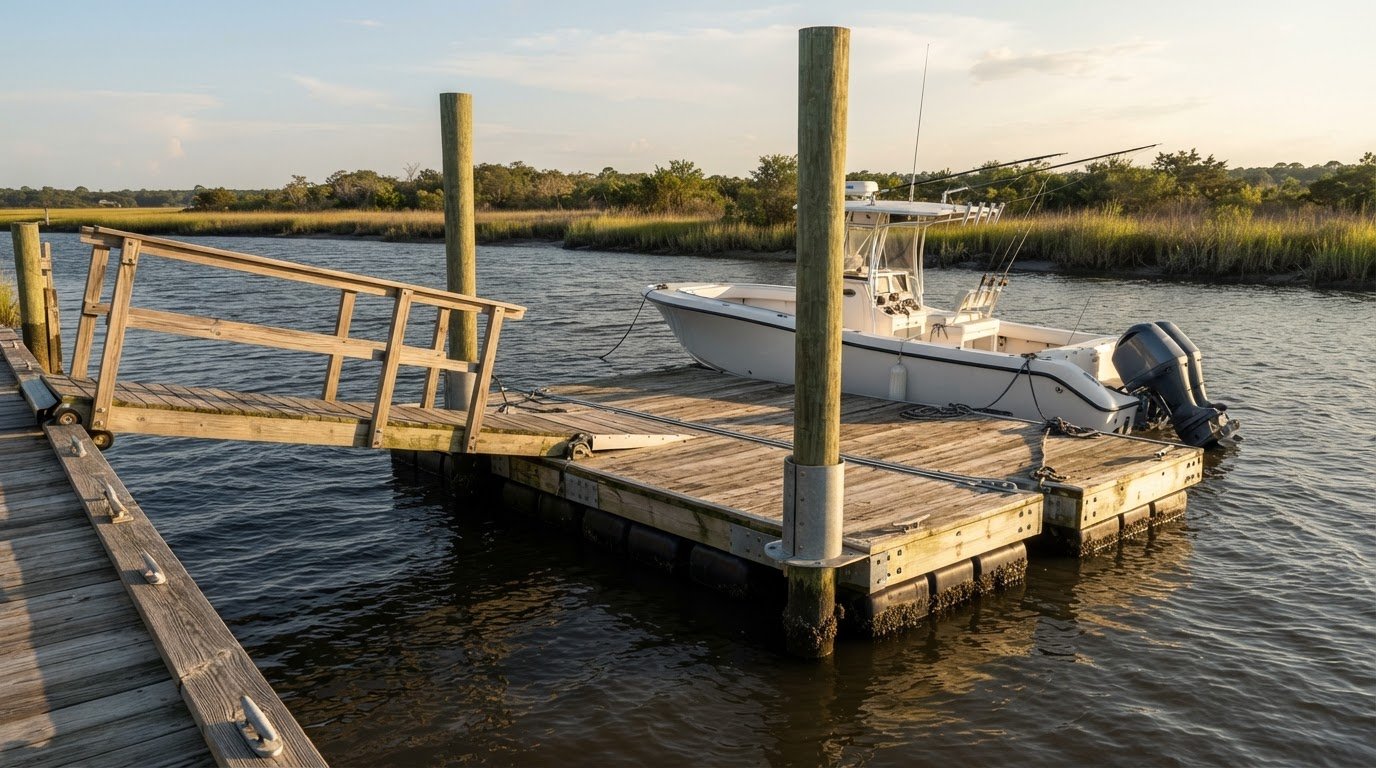
A floating dock relies on buoyancy for most vertical support, while its piles and anchors mainly resist lateral forces from wind, waves, vessels, and currents. A fixed pier places greater structural demands on its foundation because it carries vertical loads and experiences full wave forces. Neither type is automatically less costly or more durable. Site access, soil conditions, materials, installation method, and exposure all affect the project. Project pricing depends on the specific site, materials, access, and foundation type, and is provided after a quote request.
Durability also brings different maintenance needs. Floating-dock foundations need periodic inspection of piles, anchors, and connection hardware for lateral stability. Corrosion protection and wear at sliding interfaces also need attention. Fixed piers instead require a design that accounts for wave forces, potential settlement, and any ice movement at the site.
Choose a floating dock when adapting to changing water levels is central; favor a fixed pier when a set deck elevation fits the intended use and its load demands can be addressed. Discuss your dock design with a construction professional to weigh those site-specific tradeoffs.
OTBX Custom Builders, LLC connects foundation considerations with the broader dock project through Dock Construction & Repair. This service is relevant when you are planning a fixed pier, assessing an existing dock, or weighing how site access and water conditions affect construction.
Bring the project’s location, intended use, and known site information into the planning conversation. These details help frame practical decisions about pier type, installation access, and how the structure must serve your waterfront. The project’s engineering requirements remain central to foundation-specific load and soil design.
Contact OTBX Custom Builders, LLC to discuss your dock construction or repair needs.
A reliable fixed pier foundation design for saltwater starts with choices suited to the actual waterfront, not a generic detail copied from another site. Bring the intended use, site conditions, and practical access limits into one project discussion. This gives the design process a clear starting point and keeps structural priorities connected to how the pier will serve you.
Think ahead to the tradeoffs that matter most: fixed deck height, flexibility as water levels change, maintenance, and construction access. Identifying these priorities early helps shape a plan around how you use the shoreline and gives the team a practical basis for coordinating foundation design with the wider dock project.
OTBX Custom Builders can discuss how your waterfront goals translate into a dock project. Start a project conversation with OTBX Custom Builders, LLC, and take the next step with a clearer understanding of what your site needs.
A fixed pier foundation anchors a stationary waterfront structure to piles or columns that transfer its loads into soil or rock. Unlike a floating dock, the pier stays at a set elevation as water levels change. For example, a landing designed for a consistent deck height needs a foundation suited to its location, intended use, and saltwater exposure.
Engineers develop a site-specific design by considering subsurface conditions, structural loads, water forces, and construction access together. A geotechnical investigation can help characterize soil strength, consolidation, and erosion susceptibility. The design then connects the deck and supporting piles as a load path, while installation planning accounts for whether crews can bring equipment to the shoreline. Saltwater exposure also informs material and connection details.
No single pile type is best for every saltwater pier. Depending on subsurface conditions and installation constraints, engineers may consider driven piles, drilled shafts, or augered piles. A narrow approach, limited equipment access, or difficult soil can change which method is practical. Helical piles also need evaluation against site soil, loads, and access conditions before they are compared with other options.
Galvanized steel has a zinc coating that helps protect it from corrosion, but that alone does not establish resistance to marine borers or abrasion. These are separate exposure concerns to address when selecting materials and details. For example, a pile at a contact point may face physical wear as well as saltwater exposure. Specify protection based on actual site conditions and components.
Pile depth depends on soil strength, anticipated loads, and the potential for long-term scour, so there is no universal embedment depth. Scour can remove sediment around a pile and reduce the soil supporting it. A design should account for the possibility that the seabed may change over time, rather than treating its current surface as permanent.
A fixed-pier foundation must account for structural weight, people and equipment on the deck, uplift, bending, and horizontal forces. Waves and currents create lateral demands, while vessels and storm-driven debris can add impact forces. Changing water levels affect the pier’s exposure, and wind can act on the structure above the water. Engineers assess these demands alongside site soil conditions and potential scour.