
The best siding for coastal homes isn’t simply the material that resists salt air or needs the least upkeep. Coastal exteriors can face moisture,…
The best siding for coastal homes isn’t simply the material that resists salt air or needs the least upkeep. Coastal exteriors can face moisture, wind-driven rain, strong sun, airborne salt, and storm debris. To compare products usefully, look beyond broad claims and consider how each option performs as part of the home’s exterior, what care it requires, and whether its profiles and finishes suit your design.
This guide compares common siding materials, including fiber cement, vinyl, engineered wood, natural wood, and metal, and explains the trade-offs to consider. You’ll also find practical steps for reviewing product documents and coordinating siding with trim, openings, flashing, and other exterior details.
For a custom home, siding decisions work best as part of the larger plan, not as a last-minute finish selection. OTBX Custom Builders coordinates design and construction through its Coastal Dream Home Advantage process, with in-house architectural drafting and site preparation services. Considering siding early helps connect the home’s appearance with its plans and construction details.
Premature fading, corroded metal, moisture damage, and frequent repainting or repairs are reasonable concerns for a coastal home. But “coastal exposure” doesn’t describe one condition. A home may face salt-bearing air, wind-driven rain, persistent humidity, intense sunlight, and storms. The combination can also differ from one side of the house to another.
Exposure depends on the site and the home’s orientation. A wall facing open water may take more wind and rain than a sheltered elevation. Nearby buildings or vegetation, the direction of strong sun, and local weather patterns also affect what the exterior must handle. That context matters when weighing the best siding for coastal homes: a material’s general reputation can’t account for every site. For a basic overview of types of siding materials and their role as exterior cladding, start with the material category, then assess how the product will be used on the home.
Moisture can reach siding through rain, damp air, or joints and transitions that don’t shed water as intended. Trim, corners, window openings, and changes between wall materials deserve particular attention because they interrupt broad, flat surfaces. Salt-bearing air raises a separate concern: it can accelerate corrosion on exposed metal components, including fasteners, if their material or protective finish isn’t suited to the exposure.
Wind can drive rain against walls and place pressure on siding and its attachments. Flying debris can damage exposed surfaces during storms. Strong sunlight is another consideration, since prolonged UV exposure can affect finishes and appearance. These are distinct demands, not a single test that one material automatically passes or fails.
Siding performs as part of a wall system. Flashing helps direct water away from vulnerable openings and transitions, drainage paths allow incidental moisture to escape, and installation details secure the siding as intended. Compatible fasteners matter too, particularly where salt exposure can affect metal. Routine care, such as cleaning or maintaining a finish according to its instructions, also influences how the exterior looks and holds up.
Material durability describes one component; the installed wall assembly determines how the components work together under real conditions. A product-level claim doesn’t automatically describe the performance of every wall. Installation, accessories, substrate, exposure, and upkeep can differ. Compare documentation for the specific product and application, and don’t treat a broad rating as a promise about the whole house. Check that any lifespan or resistance claim applies to the chosen product and its stated conditions of use. That gives you a practical starting point for comparing materials.
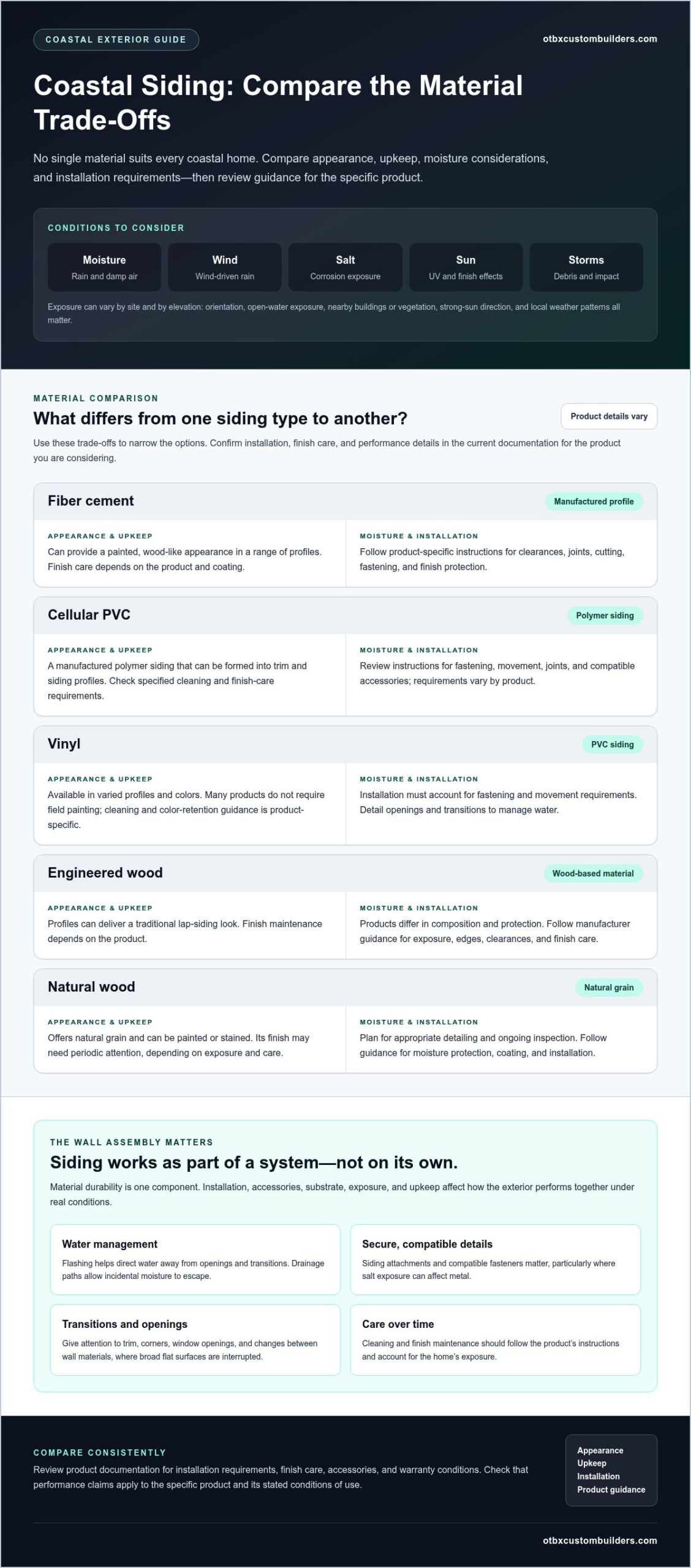
Material names are only a starting point. Fiber cement, cellular PVC, vinyl, engineered wood, and natural wood come in different profiles and finishes. Products within the same category can also have different installation instructions and care requirements. Use the comparison below to identify trade-offs, then check current product documentation for specific performance and maintenance guidance.
| Material | Appearance and upkeep | Moisture and installation considerations |
|---|---|---|
| Fiber cement | Can provide a painted, wood-like appearance in a range of profiles. Finish care depends on the product and coating. | Follow product-specific instructions for clearances, joints, cutting, fastening, and finish protection. |
| Cellular PVC | A manufactured polymer siding that can be formed into trim and siding profiles. Check the specified cleaning and finish-care requirements. | Review instructions for fastening, movement, joints, and compatible accessories; requirements vary by product. |
| Vinyl | Available in varied profiles and colors, with no field painting required for many products. Cleaning and color-retention guidance is product-specific. | Installation must account for the product’s fastening and movement requirements. Properly detail openings and transitions to manage water. |
| Engineered wood | Made from wood-based materials, with profiles that can deliver a traditional lap-siding look. Finish maintenance depends on the product. | Products differ in composition and protection. Use manufacturer guidance for exposure, edges, clearances, and finish care. |
| Natural wood | Offers natural grain and can be painted or stained. Its finish may need periodic attention, depending on exposure and care. | Plan for appropriate detailing and ongoing inspection. Follow guidance for moisture protection, coating, and installation. |
Fiber cement combines cement-based materials with reinforcing components; cellular PVC is a cellular form of plastic; vinyl siding is made from PVC. All three offer manufactured profiles, but their appearance, finish options, and upkeep differ by product. Don’t assume a claim about one brand applies to every product in its category. Before choosing, compare each product’s installation method, fastening requirements, clearances, compatible accessories, and care instructions.
Engineered wood is designed to provide a wood-based siding option, while natural wood shows the grain and variation of the material itself. Both can support traditional exterior designs, but neither should be treated as maintenance-free. Exposure, finish condition, detailing, and timely care all affect how the surface holds up. Engineered products vary, so use current manufacturer documentation for moisture and finish claims rather than assuming all products perform alike.
No material is automatically best without considering exposure, detailing, and owner priorities. A preference for a particular profile may point toward one category, while maintenance expectations or the home’s site conditions may favor another. The best siding for coastal homes is the option whose documented requirements fit the design and the way the exterior will be maintained. For a custom home, coordinated custom-home planning can bring those material choices into the design and construction process early.
The best siding for coastal homes depends on what the project needs to balance. Start with four priorities: how much upkeep you’re willing to take on, the appearance you want, the design options that matter, and the home’s actual exposure. Fiber cement may suit a homeowner seeking painted profiles and a specific exterior look, but it isn’t automatically the right answer for every site or design.
| Priority | Material traits to weigh | Installation and care variables |
|---|---|---|
| Low maintenance | Vinyl and cellular PVC avoid routine field painting in many applications; fiber cement and engineered wood may involve finish care. | Compare each product’s cleaning, inspection, finish, and repair instructions. Trim, access, and detailing affect the effort required. |
| Traditional appearance | Natural wood offers visible grain; engineered wood and fiber cement can provide wood-like profiles and painted finishes. | Consider how the finish is maintained and how replacement pieces will match as the exterior weathers. |
| Design flexibility | Available profiles, textures, and colors vary by material and product line. | Coordinate siding with trim, openings, and transitions, and confirm the required accessories and installation method. |
| Site exposure | No category alone establishes suitability for a particular home. | Match product documentation and installation requirements to the home’s exposure and project conditions. |
Compare the actual care instructions, not just labels such as “low maintenance.” A resistance claim doesn’t mean siding will never need cleaning, inspection, or repair. Check what routine cleaning involves, whether the finish needs attention, and how to inspect the siding. Consider the full exterior too: difficult-to-reach walls, detailed trim, and finish choices can shape upkeep as much as the siding material itself.
Compare lap, shingle, board-and-batten, and other available profiles across the material categories you’re considering. Think about what a future repair could look like: matching color, texture, or weathering may be easier with some finishes and product lines than others. Choose a profile that fits the home’s architecture, not only a current trend.
Fiber cement can be a reasonable fit where a homeowner wants a defined profile and painted appearance, provided its product-specific requirements fit the project. Cellular PVC, vinyl, engineered wood, and natural wood each bring different appearance and care considerations. There’s no universal winner. Installation quality, compatible components, exposure, and ongoing maintenance all affect the result. Treat product claims as specific to the product and its documented use, not as guarantees for every installed wall.
A clear selection process turns broad product claims into decisions tied to your home. Start with site conditions and priorities, then compare product documents and coordinate siding with the rest of the exterior. This makes it easier to judge which option could be the best siding for coastal homes like yours, without treating one material as the automatic answer.
Bring practical observations to the design-build discussion: which walls are exposed, where shelter exists, how sunlight moves across the home, and where rain may concentrate around openings or transitions. Then agree on the priorities that matter most. Architectural drawings and elevations can show how the siding profile, trim, and exterior transitions work together. This helps the material decision support the whole design rather than becoming a separate finish choice.
Use current manufacturer documentation to compare products on the same terms. Look for installation instructions, cleaning and maintenance requirements, compatible accessories, and warranty conditions, including stated limits or exclusions. A warranty describes terms of coverage; it isn’t a promise that damage or maintenance won’t occur. Applicable codes also belong in the planning process.
Think through the full exterior assembly, not just the siding surface. Trim, flashing, and drainage details must coordinate with the chosen material and with openings and transitions. A product that appears to fit your priorities still needs installation details suited to the home’s conditions. Keep the relevant documents together so design choices and construction planning use the same product requirements.
For broader context on how exterior choices fit into a coastal build, see this new home construction guide. To plan siding as part of a coordinated custom home, explore custom home construction with OTBX.
Siding shapes more than the finished look of a home. Its profile and placement affect how elevations read, how trim meets the wall, and how openings and material transitions are detailed. Planning those choices alongside flashing and other exterior details gives the design and construction team a shared direction before work is underway.
Early decisions give the plans room to account for the selected siding system. For example, a change in profile can affect how trim surrounds windows and doors, while a transition between siding materials needs a clear place on the elevation and a coordinated detail. These choices also influence how the exterior’s parts come together, from corners and roof edges to flashing around openings.
That doesn’t mean every material choice must be final at the first design conversation. It means considering the options while elevations, trim, and exterior transitions are being developed, rather than treating siding as a finish to select after the details are settled. A turnkey custom home builder buying guide can help explain how design and construction decisions fit into a broader building process.
OTBX Custom Builders’ turnkey process connects planning and construction from concept through the final build. The Coastal Dream Home Advantage process guides clients through that progression, while in-house architectural drafting, blueprints, AutoCAD drafting, and floor-plan design help translate the home’s design into coordinated plans. Siding selection can be considered alongside elevations, openings, trim, and the exterior details that support the overall design.
Site preparation is part of that larger picture as well. OTBX provides site excavation, grading, and earthmoving for residential project preparation, while construction planning brings design decisions into the build. Keeping these stages connected helps the team consider how material choices, plans, and site conditions relate, without treating any single finish as a stand-alone decision.
The best siding for coastal homes is ultimately a project-specific choice. Product documentation, exposure, maintenance expectations, and the home’s architecture all inform the selection. A coordinated process gives those factors a place in the conversation early, so the exterior can be planned as part of the home rather than added as an afterthought.
If you’re considering a custom coastal home, discuss your custom-home project with OTBX as part of your early planning.
Choosing the best siding for coastal homes isn’t about finding a universal winner. It’s about selecting an option that fits the home you intend to build. Before settling on a material, gather your priorities: the look you want, the upkeep you’re prepared to manage, and the site conditions the exterior will face. This gives design conversations a clear starting point and keeps siding connected to the home’s broader goals.
For a custom home, treat exterior choices as related design decisions, not isolated selections. OTBX Custom Builders brings turnkey custom and stick-built construction together with in-house architectural drafting and floor-plan design, so siding can be considered alongside the plans and the overall build. A sound choice should make sense for both the home’s practical needs and its intended character.
If you’re ready to take the next step, discuss your custom-home project with OTBX. Start planning your custom home with a coordinated approach to design and construction.
Not in every case. Fiber cement may suit a project where its available profiles and finish options match the design and the product’s instructions fit the site conditions. The best siding for coastal homes depends on more than material category: consider the specific product, the wall details, expected care, and the home’s exposure. Compare manufacturer documentation rather than relying on a category-wide promise or recommendation.
Yes, vinyl can be considered for a coastal home, but suitability depends on the product and the project. Review the manufacturer’s installation instructions, including fastening and movement requirements, and make sure the planned details work with the home’s openings and transitions. Also review cleaning and appearance-care guidance. Evaluate a product’s stated capabilities for the specific application rather than assuming they cover every exposure or installation condition.
Salt carried in the air can contribute to corrosion on exposed metal parts, such as fasteners or trim components, depending on their material and protection. Salt deposits may also collect on exterior surfaces, so product care instructions matter. If a home has metal accents or attachments near the siding, consider how those components interact and how they can be inspected and cleaned as part of routine exterior care.
Not automatically. Replacement timing depends on the product, its installation, exposure, maintenance, and the condition of the siding and surrounding details. Rather than assuming a fixed schedule, inspect for changes such as loose sections, damaged finishes, or deterioration around openings. Keep records of the product and installation details; that information can help guide maintenance decisions and identify whether a concern is limited to one area or affects a larger part of the exterior.
Wood siding can be a suitable choice when its appearance fits the design and the owner is prepared to follow the product’s finish and care guidance. Before selecting it, consider how accessible the walls are for inspection and upkeep, and how exposed edges, joints, and trim will be detailed. Engineered wood and natural wood differ, so evaluate the exact product rather than assuming their moisture protection or maintenance needs are the same.
Both matter, and neither works in isolation. Siding selected for a project still needs its specified fasteners, accessories, and detailing at windows and doors. A mismatch between product instructions and how the wall is built can undermine the intended performance. Treat the material choice and installation plan as connected decisions, and use product documentation and project requirements to guide the details.
Read the actual warranty documents side by side. Note what components and types of damage are covered, what exclusions apply, whether the warranty has care or installation conditions, and what documentation is required for a claim. Check whether coverage differs for the finish and the siding itself. A warranty explains the manufacturer’s stated terms; it doesn’t guarantee a particular service life or prevent the need for maintenance.
Choose a direction early, even if the exact product is still being evaluated. An early decision can help the design team coordinate elevations, trim depth, window and door details, and transitions between materials before those elements are fixed. For a custom home, OTBX’s in-house drafting and floor-plan design support planning from concept through construction. The selected product and its requirements can then inform the relevant exterior details.